Purpose of this blog

Dmitry Yudo aka Overlord, jack of all trades
David Lister aka Listy, Freelancer and Volunteer

Friday, April 4, 2014

[WoTB] Beta Test Is Over


World of Tanks Blitz closed beta has come to an end. We have gathered enough feedback and data to polish the game in future versions. We are especially excited by really warm reception of the game in all regions.

Each Blitz tester with 1+ battles will get some gifts when the game goes live in the respective region.

Thanks to all who have been testing with us and stay tuned for more news!

Sunday, March 30, 2014

Grand theft Walrus

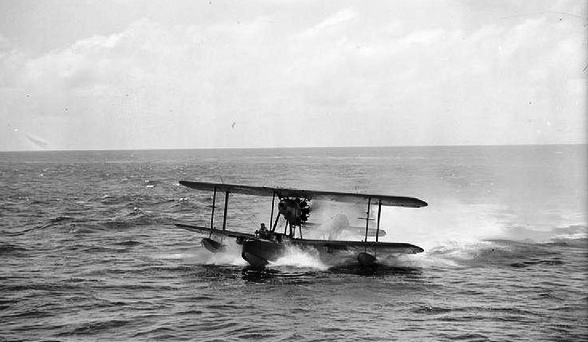
R,J Mitchel of Supermarine is most famous for developing the Spitfire. However, he was also responsible for developing another single engined all metal plane that served throughout the war, and its one most people have not heard of.
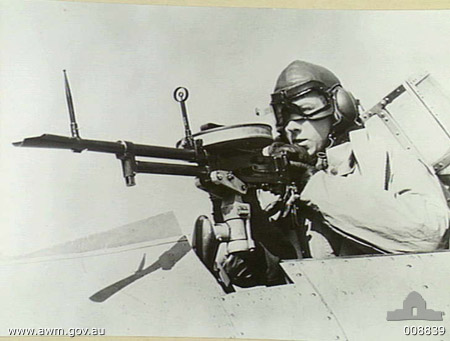
Designed in the early 30's for Australia the Seagul V was to be a catapult launched flying boat used by the larger capital units to spot for gunnery.  The first test model was flown in 1933, where Superamine's test pilot surprised everyone at the display by looping the aircraft.  The aircraft was slow, and barely armed with only a pair of .303 Vickers K guns.  In Royal Navy and RAF usage it gained the name its more commonly known as, the Walrus.
 One story of the Walrus comes from the Norway campaign.  HMS Suffolk launched its Walrus' to spot for its gunners as it bombarded a shore target.  However as she was under the risk of submarine attack she was unable to retrieve the planes.  Both planes were forced to fly back to Britain.  The five hour flight ended with one of the planes landing and running out of fuel on the runway.

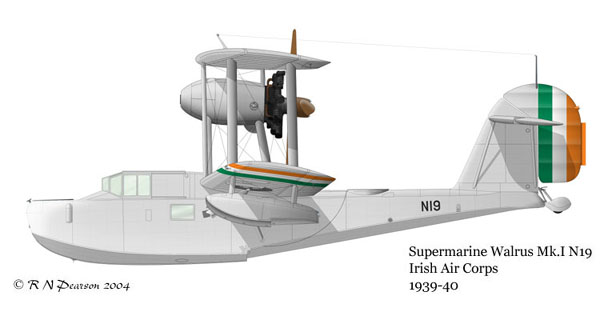
The next remarkable story concerning the Walrus comes from Ireland.  In 1939 the Irish Air Corps had three Walrus delivered and used them for maritime patrol.  One plane, No 18, had a interesting time, whilst being delivered it was forced down in heavy seas in the Irish Sea causing damage to the wings.  Unable to fly, it was then towed into port by a local fishing boat and lifeboat.  Once in port it was loaded onto a truck and driven to its final destination at Dublin.  At Baldonnel Aerodrome it was repaired and put back into service.

 On 9th January 1942, No 18 was stolen.  Four Irish aircrew led by the pilot Alan Thornton stole the silver painted Walrus from the airbase where she was stationed.  They set course for Cherbourg, with the intention of joining the Luftwaffe.
Over Cornwall things started to go wrong with the plan.  They were spotted by a flight of RAF Spitfires.  The RAF planes escorted the Walrus to St Eval, where the crew were arrested and the plane placed under guard.  Both the plane and crew were returned to Ireland, where the airmen were court-martialed.  Alan Thornton received a 16 month jail sentence.

No 18 continued to serve with the Irish Air Corps until 1945, then it was sold into civilian use.  In 1946 she was put up for sale again, and brought by the Royal Auxiliary Air Force as a runabout, where they used her to fly to the coast with bathing parties.  Finally she was retired and left on a dump until she was eventually rescued in 1963.  She then ended up at the Fleet Air Arm Museum at Yeovilton.

1942 also saw the last successful air attack by a Walrus.  On the 11th of July an Italian submarine was attacked near Cyprus and sunk.  From then on the Walrus continued to serve as air sea rescue and patrol aircraft.  On 10th of August 1945, a Walrus was sent to rescue a downed New Zealand pilot near Japan.  The Walrus searched for hours until it finally saw the pilots life raft. However the long search caused the Walrus to run out of fuel and it had to set down some distance away.  What the Walrus crew didn't know was that the New Zealand pilot had already been rescued by a US Submarine.  When the submarine saw the shape of the Walrus chugging through the skies they hadn't believed anything that looked like that could be friendly and crashed dived to avoid the supposedly Japanese air craft.
The Walrus crew were picked up later by a destroyer.  The pilots name was Pilot Officer Bruce Ada, an Australian who was in service with the Royal Navy and based upon HMS Victorious.

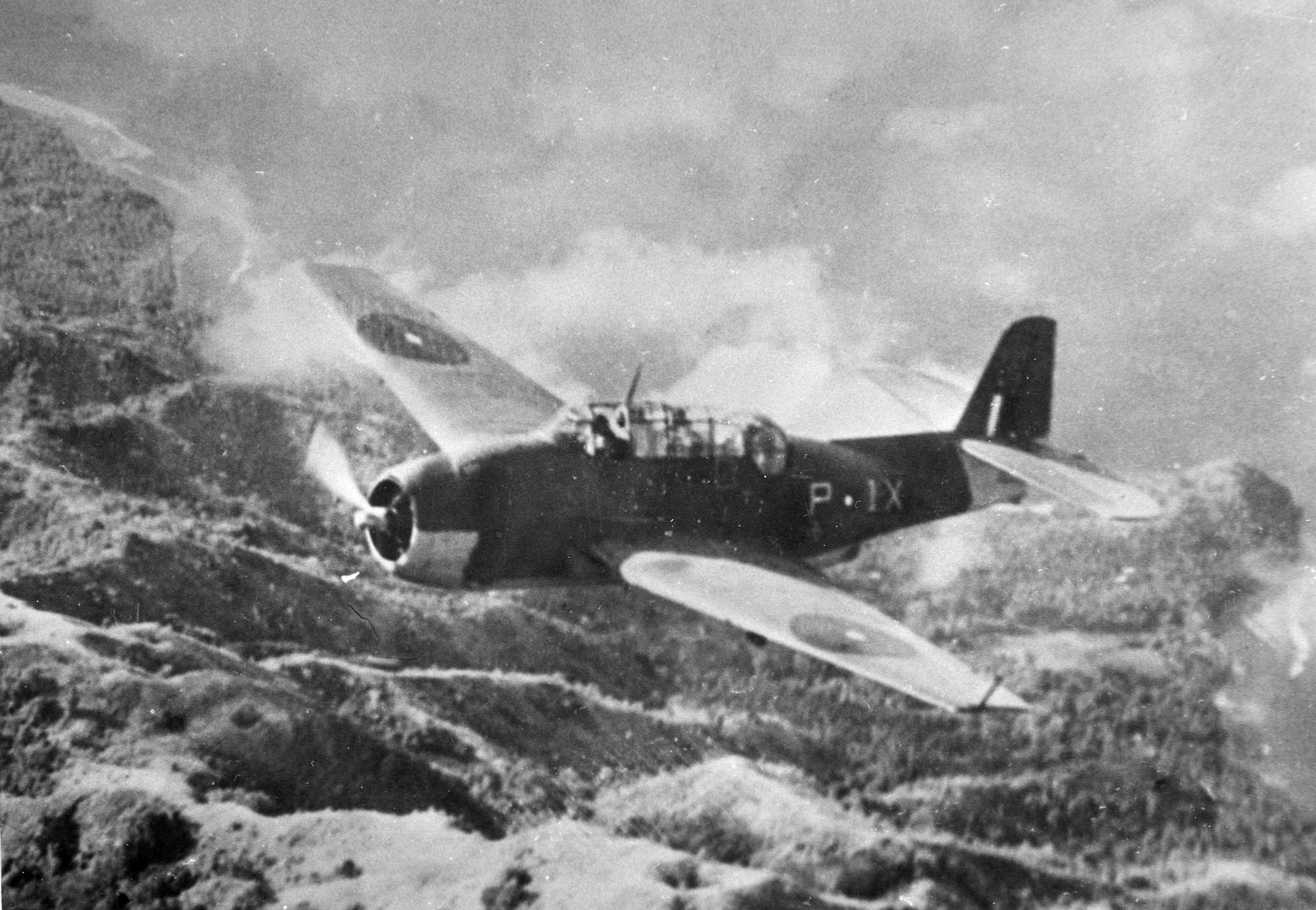
Earlier in the year Pilot Officer Ada had carried out a much more daring rescue.  During the battle of Okinawa Sub Lieutenant John Gass was a navigator in an Avenger bomber over Miyako island.  His plane was hit by a heavy AA Shell, which struck right under his seat and caused the Avenger to burst into flames.
Avenger from HMS Victorious
Injured by the shell burst and burnt by the flames, Sub-Lt Gass scrambled out of the plummeting fireball that was his plane.  He was the only member of the crew to make it out of the aircraft.  The badly injured Sub-Lt Gass landed in the sea near the Japanese held town of Hirara.  The current quickly swept Sub-Lt Gass away from the Japanese town.

Then Pilot Officer Ada and Sub Lieutenant Marshall appeared in their Walrus.  Chugging along at its heady speed of about 130mph they landed about half a mile from the drifting and exhausted Sub-Lt Gass.  Pilot Officer Ada then began to slowly taxi through the deadly reefs that littered the area.  The Japanese on the shore then began to fire their heavy AA guns at the ponderously moving Walrus.  Sub-Lt Marshall was manning one of the Vickers K guns, and started to bombard the shore line.  The Walrus eventually made it to the downed flier who was promptly hauled aboard,  While Pilot Officer Ada taxied out through the reef Sub-Lt Gass was given first aid and brandy.
After returning to HMS Victorious, the Royal Navy queried the pair if they had opened fire on the island. Pilot Officer Ada's response was
"No we threw coral at them."

The message received by Pilot Officer Ada from Rear Admiral Denny, who was the captain of HMS Venerable, the carrier Sub-Lt Gass’ Avenger was based upon read slightly different.  It said:
"We are most grateful for such a fine rescue”

Monday, March 24, 2014

[WoTB] Closed Beta Starts Tomorrow

World of Tanks Blitz closed beta officially starts tomorrow - March 25, when we will invite the first wave of players to test the game on RU, EU, NA servers.

To increase your chances to be one of the first, fill out the application form on the respective WoT portal and leave the link to your game profile in comments to this post. I will do what I can do. :)

And the new video dedicated to the game.


[WoT] WoT 0.9.0 Public Test Feedback

0.9.0 is going to be next big hit for World of Tanks with:

  1. Historical Battles mode. How do you like it so far? 
  2. HD tank models for some tanks (T-54, Tiger I, M4 Sherman) 
  3. Physically based shading (better and more realistic materials)
  4. Disabled Confronation mode
  5. Reworked maps - “Malinovka”, “Serene Coast”, “Steppes”, “Redshire”, “Mountain Pass”, "Pearl River" and "Severogorsk"
  6. FOV configuration 

Especially interested in feedback on the points above. And anything else you wish to comment on.

Sunday, March 23, 2014

Grabbing the Oakleaf by La Horgne

Stories of cavalry charging tanks are common from the early years of the war. Very few are true, and France has its own story.
All very inspiring stuff, however as usual reality is somewhat different, but it is still a remarkable story of resistance.  It starts with the opening German attack on France. 3rd Spahi Brigade was deployed to occupy positions at the Mouzaive bridge.  However the brigade’s lead elements were beaten to it by minutes by the Germans.  The Germans held off the attempts of the 3rd Spahi Brigade to retake the position.  The 3rd Spahi's fell back to positions further back, and the Germans drove a wedge between two French armies.  At 0330 on the morning of the 12th of May the 3rd Spahi's commander ordered his unit to withdraw, after hard fighting, without consulting his superiors. This let the Germans pour through the opening and the French line collapsed. After a few days fighting the 3rd Spahi found themselves at the village of La Hornge.
The 3rd Spahi's were a colonial cavalry unit, consisting of two regiments of cavalry, one from Morocco and one from Algeria.  After five days fighting they were exhausted and had lost most of their heavy weapons. The brigade was under 50% manpower and only had two AT guns.
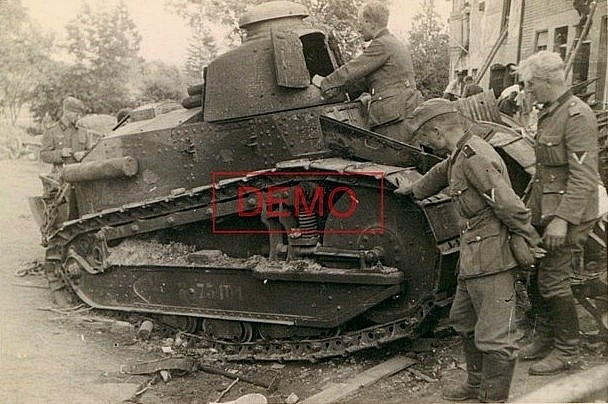
Realising their mistake of the 12th the 3rd Spahi's decided to try and atone.  After being informed that reinforcements were due early in the afternoon of the 15th the 3rd Spahi's fortified the town of La Horgne. Knowing that they would hold, even the HQ squadron was dug in on the line.  The brigade had obtained three broken down FT17 tanks, and used them to block the roads leading into the village. 
Despite this they had no mines or wire to further reinforce their position.   The HQ squadron barricaded itself in the church, along with a 37mm Mle1916 TR infantry gun.

The battle opened after 0700 on the 15th when Luftwaffe fighters strafed the position.  At 0800 the first German ground forces moved in.  Two battalions of infantry from 1st Panzer Division launched an attack, the attack was met with a wave of gunfire.  After a sharp engagement the Germans fell back.  The Germans then re-grouped and brought up four 105mm howitzers, IlG-18 infantry guns and PAK-36 anti-tank guns.  After plastering the village the Germans launched an assault mounted in Skdfz 251 half-tracks.  The Saphi's held out all morning against the Germans overwhelming fire-power.

About lunch time the Germans called for the surrender of the Spahi's over a loudspeaker, and even sent a delegation under a flag of truce to call for their surrender.  The Spahi's refused.  At 1300 the Germans began to attack, only this time instead of trying to push the Spahi's out of La Horgne, they started to encircle the village, pushing through the positions the Spahi's had set up on the ridge line.  The Germans put even more artillery into the attack, bombarding the back of the village and the ridge line.
With only the brigades remaining HMG's and some infantry holding the ridge, the Germans managed to encircle the village.

About 1530, in the woods above La Horgne there was a squadron led by Lieutenant MacCarthy.  The squadron was ordered to launch an attack to break the encirclement.  Lt MacCarthy decided that moving as fast as possible was the best idea, so he ordered his squadron to mount up and advance.
With a thunder of hooves the squadron burst from the tree line and raced forward towards La Horgne which was about a kilometre distant.  As the horses pounded forward, German tanks appeared and started hammering at the Cavalry.  Taking heavy casualties the squadron was forced to break off its attack.
Inside the village the Germans had managed to force their way into the first houses.  With the village encircled the Germans attempted to crush the knot of resistance.  A company of twelve Panzer III's with support from eight Panzer IV's and along with lighter tanks was formed up.

At the church Warrant Fievee was in charge of the 37mm gun, with Spahi Saidi Atallah and one other.  They had made a hole in the church wall for his anti-tank gun.  As he swung his weapon towards some German tanks the enemy infantry spotted the movement and started to attack his position.  A grenade landed in the doorway near by and the shrapnel from it caught Warrant Fievee in the hand.  Warrant Fievee refused to leave his position and a few heartbeats later one of the assistant gunners was wounded in the arm and thigh.
The storm of fire the Germans laid on the position forced the crew to retreat from their gun.  When they reoccupied their position an officer, Captain Combourieu, ordered them to shift the gun to the left to engage a German column consisting of six tanks and two motorcycles with sidecars that was halted at one of the FT17 barricades.

The two remaining crew moved the gun to the new position.  Warrant Fievee aimed and hit the last tank in the column to prevent them from withdrawing.  Warrant Fievee then took out the lead tank, and began to hammer the column of vehicles, using up all his ammunition.  The German survivors then broke and fled into a tree line to the right of the road.

With the village engulfed in flames, the infantry were almost out of ammunition for every weapon in the brigade.  Above them German reconnaissance aircraft were directing their artillery fire onto strong points.
LA Horgne after the battle
About 1600, Colonel Burnol the commander of the Algerians, refused to surrender.  So he located fifty troops, and handed out the last case of grenades.  He led those fifty men in a breakout attempt.  The Spahi's had almost made it when they ran into the Germans.  One Spahi had his carbine shot out of his hands as the Germans opened fire.  Armed with only a bayonet Col Burnol charged at the Germans, where he was killed in action.

Several other breakout attempts were attempted.  One led by Colonel Marc, the Commander of the 3rd Spahi's was contained and the colonel sustained injuries.  Col. Marc made it back to his command post in the devastated village.  At 1800 with no ammunition remaining for any weapon, Col. Marc had no other option but to order a ceasefire.  When the few Spahi's that were left struggled out of the ruins of La Horgne the Germans presented arms in salute to the 10 hours of fierce resistance.  The commander of the German forces later said:
"I fought against all foes in both wars and I was always in the thick of it. Rarely did anyone fight as outstandingly as the 3d Spahi brigade. [...] The Brigade had ceased to exist. It had sacrificed itself for France."
In total the Germans lost 16 tanks. The German 1st Infantry Regiment suffered the heaviest casualties of any unit in the French campaign.  The Spahi's took about 660 casualties both wounded and killed.  A few of the survivors that had broken out continued to fight until the armistice.

Wednesday, March 19, 2014

[WoTB] Going Closed Beta

World of Tanks Blitz is going closed beta on iOS devices.


You can apply for beta here: EU and NA

Jump in, testing will start shortly (once we roll out the server infrastructure and accumulate enough beta applications).

Any questions?

Sunday, March 16, 2014

Setting the Record Straight

I have not done a technical article for a while, so I'm afraid today's one will be.  No stories of daring do today, but normal service will be resumed next week.  Sorry if its all a bit boring.

This all came about due to Silentstalker's recent post on the “For The Record” blog about the Armoured Vehicle Royal Engineers (AVRE) tanks.  In that article Silent cites me as a reference, but unfortunately he got a few bits and pieces wrong.

Let me hasten to add, this isn't his fault though.  He was citing some research I had posted, and I'd gotten some stuff wrong, mainly because of confusion in the exact details (which I will explain later).  Chatting to Silent he's suggested I write a piece explaining the ins and outs of a subject he's not fully up to speed on, so here is a more detailed version.

So we'll start in the Second World War.  In February 1943 at Hankley Common, a pair of modified Churchill tanks were trialed.  To one of the Churchills was fitted a deployable armoured screen that allowed sappers to work under cover and use explosives to demolish a concrete wall.  The other tank had its gun replaced with a 290mm spigot mortar.  These ideas were refined and built into one hull and became the Churchill AVRE we all know, which served throughout the war.  The success of this vehicle cemented the idea of the AVRE in the minds of the British military.
The next step came in August 1944.  The British were testing a round called the "Wallbuster". It was a 7.2" calibre gun.  The first tests on 5ft of concrete blew a hole straight through it, and blasted fragments 60 feet away.  They then fired it at a plate of 150mm thick armour. The impact blew a scab of armour about two feet square weighing 117 lbs off the inside of the armour.  They estimated the scab would be travelling at 600 feet per second. This appears to have been the light-bulb moment when the British military fell in love with HESH rounds.
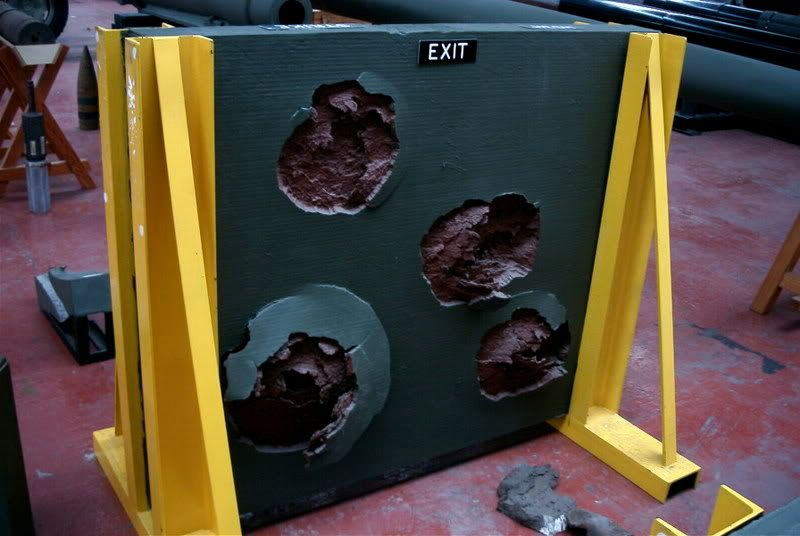
120mm HESH impacts. A165mm round would be at least 6 times as powerful
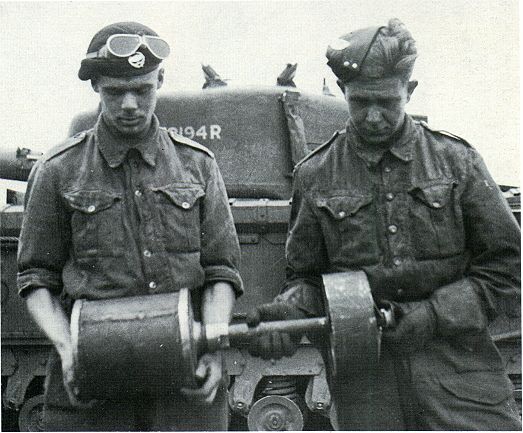
Then after the war the British decided to build a new generation of AVRE's, and the tank selected was the Churchill MKVII, of which the British had a fair old number lying about spare.  Initial tests of two weapons were carried out. These were a 7.5" (190mm) and a 6.5" (165mm) gun. It was found the performance of the two guns was almost identical, only the 6.5" gave more room inside the tank, and used smaller rounds, so more ammunition could be carried.  The 6.5" gun fired its shells at the low velocity of 850 feet per second and the shell weighed 60 lbs, of which 24 lbs was plastic explosive.
The handle is removed before loading.
So the Churchill MKVII AVRE was armed with an Ordnance BL 6.5" Mk I.  When the British switched to a new method of vehicle and gun numbering these became the FV3903 AVRE and the 165mm L9 Demolition Gun respectively.  To try and avoid confusion, from now on I will call the L9 by its earlier name of BL 6.5" Mk I.
Now the US enters the picture, and this is what led to my mistake.  On June 21st 1951 the US and UK governments began talks about purchasing the BL 6.5" Mk I.  This lead to some misunderstanding, but the upshot of it was the US paid $1,334,000 for 100 guns and ammunition in May 1953.

The US developed two guns from the BL 6.5" Mk I.  These were the 165mm T156, which was essentially the same as the British gun, although it did have some minor alterations.  Then came the 165mm M57, which was the production version of the previous gun.

Now we skip forward to 1962, and the first prototype of the Centurion AVRE.  The Centurion AVRE first entered service in 1963, and eventually replaced the FV3903 entirely in 1965.  The Centurion AVRE was armed with a L9A1 165mm gun, which could fire a 64 lbs shell.  Its a sign of how far technology had come, as about 60 lbs of that is reported as plastic explosive (more on this in a moment).  The L9A1 fired its shell at a higher muzzle velocity than the previous BL 6.5" Mk I.  Interestingly the L9A1 could also fire the earlier 6.5" shells as well.
The penetration of the L9A1 is given as 17 feet, or over 5 meters, although I think this is against concrete fortifications.  One crewman claims to have seen a Conqueror hit in the turret and the turret was sheared off by the force of the explosion.
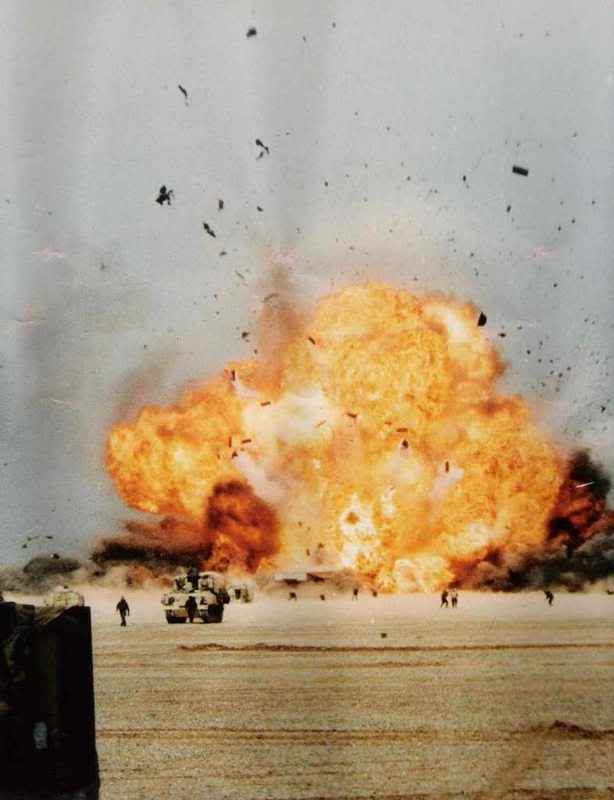
A Centurion AVRE when a freak accident caused the Ammunition to ignite.
The L9A1 was capable of firing this shell about 2000 yards with enough accuracy to hit a bridge support at 800 yards, or a bunker at 1400 yards.

So why the confusion?  Well the US brought the L9A1 for their M728 Combat Engineer Vehicle.  As before they tweaked it a bit so it was different and called it the M135.  But, and this is what is catching everyone out, they continued to fire the old 165mm ammunition that the M57 gun fired. The round fired by the M57 gun, appears to have been a modified version of the 6.5" BL MKI round. With about 30 lbs of explosive in the warhead. The US designated this the M123 HEP.

So this leaves us with a slight issue. There's plenty of authors who give the weight of about 30 lbs of explosive as the L9A1's warhead.  They could be right, but they could be mistaking the L9A1 and the M135 shells as one and the same.  Of course 60 lbs seems an awfully high percentage of the shell to be explosive.
L9A1 165mm shell. The Pebble beside it is a 2Pdr shell.
Simply put it's all very confusing, and myself and others are still trying to work out the details.  This is where Silent got his faulty information from.  Of course new information is coming to light all the time, so the above might be just as wrong!

Next week we're back to normal, I've got a story involving tanks, heroics and horses, and a battle most of you may well never have heard of lined up to tell you.

Thursday, March 13, 2014

[WoTB] Ready for Beta!?

Obviously, it's still somewhat semi-official, but we have finished preparations for closed beta on the tech side.

This means [provided that nothing extraordinary happens of course] in the very near future you will be able to get hold of tanks on your mobile. For now on:
  • iPads: 2, 3, 4, air, mini, mini Retina
  • iPhones: 4S, 5, 5C, 5S (phones are not supported officially as of now, but technically you will be able to install and play the game)
Follow the news for more information on when&how to join the beta.

PS: Andorid version for selected devices is already full-functioning, however the beta for Android devices will start at a later date.

Sunday, March 9, 2014

Pakistan's Waterloo

Tanks are mighty behemoths of destruction, but in one case they have created as well.  This all happened during the short 1965 war between India and Pakistan.

India was having a bad time of it in the early 1960's.  In 1962 China had defeated them militarily in the Himalaya war, then in 1964 its much loved Prime minister had died. Hostilities then began to escalate with Pakistan in mid 1965, until all out war broke out with both sides launching attacks, skirmishes and infiltrations on the same day.
The first official act of war was when the Indians launched a large attack across the border aimed towards Lahore in early September.  This attack was stopped when it reached the Ichogil Canal.  Despite the Indians knowing about the waterway they were utterly unprepared for forcing a crossing and their attack stalled.

With the Pakistani troops defending the bridges or having blown them up the Indians had no means of conducting an assault crossing. In one sector however, two companies of infantry did manage to use the rubble from a destroyed bridge to cross.  On the same day the Pakistani's launched a massive counter attack with its 1st Division.  This counter attack forced the Indians back, as their forces began collapse and rout in the face of overwhelming fire-power.  The Indian forces began to dig in in an attempt to hold their ground.

The 1st Division consisted of about 300 M48 Pattons, in three armoured brigades.  The M48's were newly purchased from the United States.  Equally every other branch in the 1st Division was equipped with new equipment.  Arrayed against them were the Indian forces, mostly equipped with M4 Shermans armed with 75mm guns. There were some 76mm armed tanks and a few units of Centurions in addition to the Shermans.
The Pakistani First Armoured Division was given a final objective over 100 miles inside India, but first it had to capture the village of Khemkaran 5 km from the border. The initial advance was beset with delays, at first bridge construction over the Rohi Nala river was several hours behind schedule, then one of the tanks got stuck on the bridge which left only about a companies worth over the river.

Then on the 7th of September the Pakistanis split their forces, although they regrouped towards evening, in the region of Khemkaran.
Near Khemkaran was the Indian infantry of 4th Battalion of The Grenadiers.  One of the companies had the 32 year old Havildar (roughly Sergeant) Abdul Hamid.  After 5 years of service he had been appointed to Company Quartermaster.  The 4th Battalion had advanced to the Ichogil Canal, and after the failure to cross the Indian forces had fallen back. The 4th Battalion had been in action for the previous 24 hours with no rest.
Havildar Abdul Hamid
By then they had fallen back near to a village called Chima, where they had began to dig in on either side of the main road.   They deployed their four jeep mounted 106mm Recoilless rifles covering the road.  The weapons were perfectly sighted, using ploughed muddy fields to increase their fields of fire, while the guns were dug in behind sugar cane or cotton bushes.  The recently ended monsoon also made the ground so much harder for the tanks to use.
Havildar Hamid was very familiar with the 106 mm's, having spent his entire career crewing them.  He was also considered the best shot with the recoilless rifles in the battalion.  His skill with these weapons meant that although he maintained the rank of his former station he was still the leader of the battalions AT platoon.

Suddenly Patton tanks appeared from the direction of the canal, barrelling down the main road.  The lead Patton through luck spotted Havildar Hamid, halted and the commander of the tank yelled to Havildar Hamid asking for directions.  His response was a 106 mm shell that destroyed the tank.  The crew frantically re-loaded and Havildar Hamid destroyed a second and then possibly a third tank (note: the reports from multiple sources are contradictory as to exactly when he knocked out the tanks).
The 9th was relatively quiet, and the 4th Grenadiers carried on digging in.

At 0800 on the 10th the Pakistani forces tried again for a big offensive.  M24 Chaffee tanks approached the line the Grenadiers were holding under the cover of Pattons and artillery fire against suspected positions, they tried to scout the front line and force the AT guns into giving away their position.
The Indian gunners wisely held their fire, crouching in their fox holes while the artillery sent shock waves through the air and kicked up splats of mud.
After this Pattons moved up in force several tanks abreast and began to roll forward with all their guns blazing. By 0900 the Pakistanis shifted their attack to a weaker position, Havildar Hamid spotted another column of Pattons smashing through the forward company position.

Despite the artillery fire Havildar Hamid drove his Jeep mounted 106 mm out of its position and took up a flanking position to the thrust smashing through the infantry.  Once behind another bush and within range Havildar Hamid opened fire.  His first shot destroyed the lead Patton. Recoilless rifles have a massive firing signature, so knowing he was likely spotted Havildar Hamid reversed his Jeep and moved to a different location.  Once aimed and set he fired again.  The 106mm round smashed into the target Patton causing it to burst into flames.  As he pulled out of position the Pakistanis saw him, and started firing everything they had at him.
With bullets sleeting past like hailstones, and tank shells thudding down near him Havildar Hamid calmly aimed at a third Patton.  Again his third shot of the day flew true and destroyed the Patton. Once reloaded Havildar Hamid aimed at a 4th Patton.  The Patton fired and the HE shell landed close enough to Havildar Hamid’s unprotected Jeep.  The entire crew were killed by the blast.
Again accounts do not record if Havildar Hamid destroyed the 4th tank.  But we do know that Havildar Abdul Hamid killed seven Pattons in those two engagements.  For this he was awarded the Param Vir Chakra medal, India's highest decoration for valour.

Elsewhere the Pakistanis were suffering just as badly.  In many places the Indian tankers hidden in the lush undergrowth or by sugar canes in their Shermans waited until the Pattons were at point blank range before firing.  Equally the monsoon soaked ground caused such bad mud that the Pakistani tanks simply bogged down.
The attack by the vaunted 1st Armoured Division began to break down and lose momentum.
The Divisional Commander came forward in his tank to try and get the stalled attack moving again. However the Indians picked up the radio signals from his command tank, and promptly shelled him with their Second World War vintage 25 pounders and BL 5.5" guns.  One of the guns got lucky and killed the Divisional Commander.

With no leadership left and suffering badly at the hands of the dug in Indians, the Pakistanis fell back.  One of the 1st Lieutenants that retreated that day was Pervez Musharraf, who later became president of Pakistan.
But what of the creation I spoke of at the start?  Well all the Pattons that the Indians captured were taken to one place.  Slowly over time a settlement began to form.  Then the tanks were removed, and are now displayed across India on war memorials.
The settlement at the graveyard of the Pattons continued to grow, and for a time was named Patton City. Although it appears to have reverted to one of the names of the local villages either Bhikhiwind or Khemkaran, western sources are not exactly clear on this.

Thursday, March 6, 2014

[WoWP] Update 1.2

Major update 1.2 for World of Warplanes is now live.


The key features are:

  • replays (finally)
  • battle missions 
  • advanced post-battle statistics
  • physics and balancing changes
  • interface improvements 
Any feedback?