Purpose of this blog

Dmitry Yudo aka Overlord, jack of all trades
David Lister aka Listy, Freelancer and Volunteer

Sunday, September 21, 2014

The new iTank

 Apologies, Bit of a short one today, as I'm off on Honeymoon, and don't have much time.

Earlier in the year I was combing the Archives and tucked away in the back of a document about the FV201 series, unseen for a number of years due to miss-filing, I found a few pages talking about a tank I'd never heard of.  Having a lot to do that day I quickly took some photo's and got on with it.
Under later review I realised I'd found documents talking about a brand new infantry tank, a replacement for the Churchill. Which would make this mystery vehicle the Infantry Tank MKV, if it made it off the drawing board. In the documents it was only known by the initials "WB1".
(When discussing this find with a few others I jokingly claimed the right of naming my discovery, and named it after my fiancée. It fits British tank naming conventions, her name is Claire)

Myself and Vollketten from the US server have been plugging away at this problem since then and we have a few more sources to check, but we've generally drawn a blank. No one, and I mean no one has heard of it. Even the librarians at Bovington haven't heard of it. 
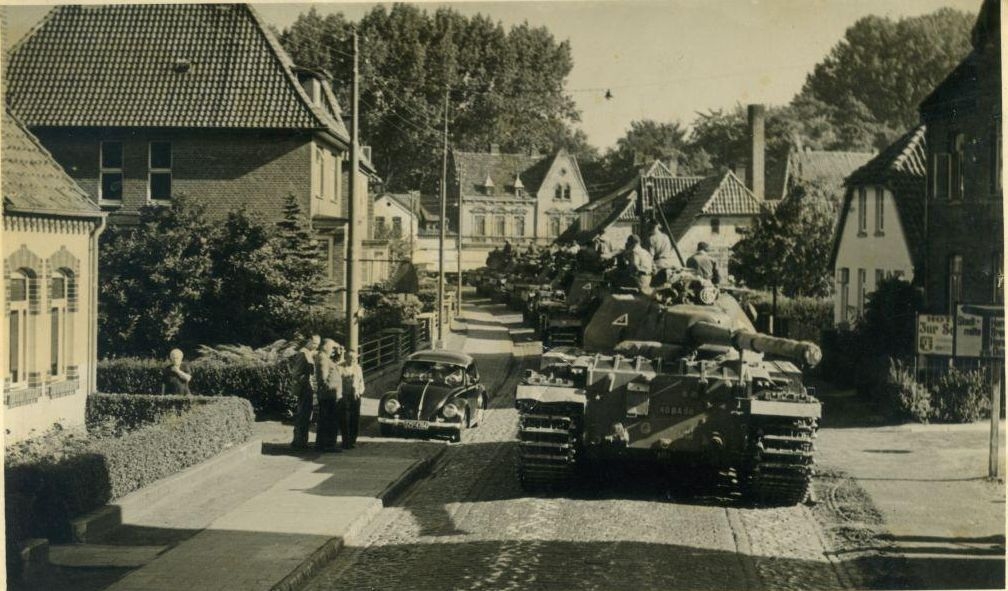
Googles contribution to searching for WB1 Tank, and that's a propaganda poster with a Churchill MKII
So here's what we know at the moment.

On 14th of May 1948 the General Staff issued a specification for a new 70 ton tank. The date is interesting when you consider that the Black Prince had already been halted, and had previously carried a 17 pounder gun. The specification called for a tank with a speed of 20 mph and an engine giving a power to weight ratio of 0.75 BHP per ton! It was required to have a 100 mile operational range.

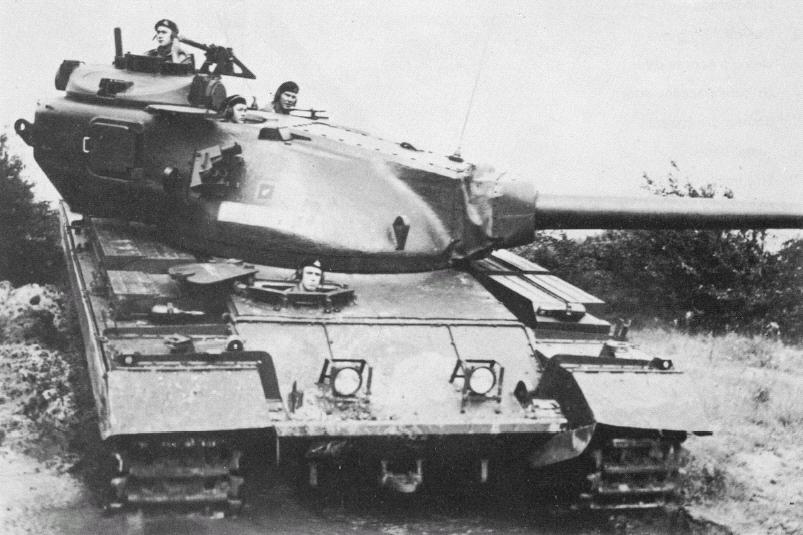
A43 Black Prince
The performance was largely decided by its armour. The specification called for 400mm basis through the frontal 60 degree arc. The specification talks a lot about sloping, so its safe to assume that the tank would be well angled. Roof armour was to be immune to guns up to about 5.5" calibre if the shell was to detonate within two feet of the roof, and the belly was to be resistant to 25 pound mines.

Armament was to be a gun of at least three inches and capable of penetrating 125mm of armour at 30 degree's of slope at the range of 2000 yards. You'll remember in my earlier article about the Conqueror that the British were having trouble rationalizing what to do about guns on tanks, although the choice of a three inch weapon was made at the start of this period of indecision.
The HE and smoke capabilities were to be at best the same level as the current 77mm gun. 80 rounds of ammunition was to be carried along with a single co-axial machine gun.

Another oddity was the requirement to have full climate control and protection against chemical and biological weapons, along with infra red equipment for night time driving.

On the 22 of June 1948, A.E. Masters, the Chief Engineer at the FVDE replied having reviewed the specifications. His first conclusion was that the armour requirement of 400mm was impossible, and the best that could be obtained was only 350mm basis. Side armour was to be about 100mm.

On the gun front he states that he used the current 77mm gun in his review, and checking other sources you can see that APDS from a 77mm has the required performance against armour.
The reply from Mr Masters highlights something interesting. He was having trouble fitting all the components into the tank. First off the biggest engine they could get in due to the weight requirement was something about the size of the Centurions engine, and so the top speed would be limited to about 17 mph. Equally the good cross country performance ate into the size of the crew compartment, which meant they were looking at a rather cramped interior.

After that, there's not a lot else on the subject. We're still looking though!

Sunday, September 14, 2014

Tower Defence

Today I'm going to veer a little off track. Up until now I've kept my stories to the period of modern mechanical warfare, say after 1900. There are many good reasons for it, not least its of interest to you, and its easier to find sources.
However last Friday (the 12th of September) is the anniversary of a battle, that is almost unknown in the West. The soldier who mentioned where I could read it last year stated "[...]made the 300 Spartans look like a bunch of girl guides." He's not wrong either. So lets cast our minds back to September 1897.


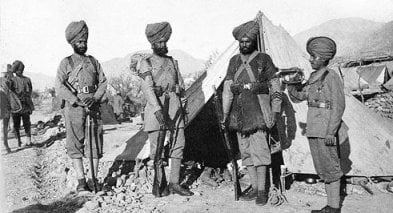
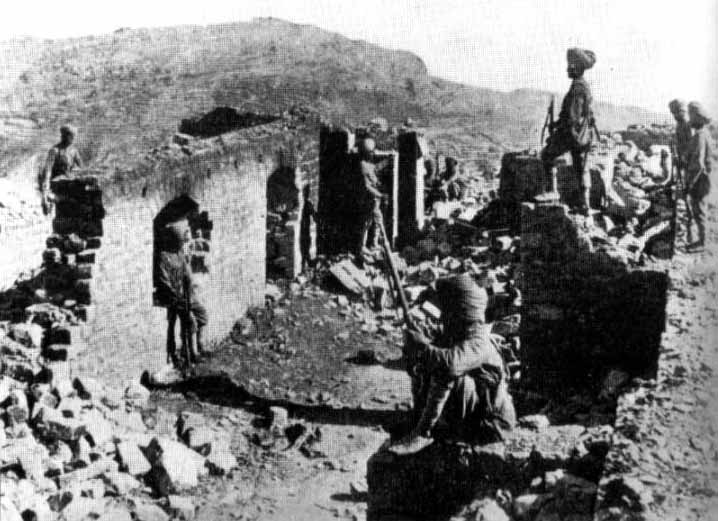
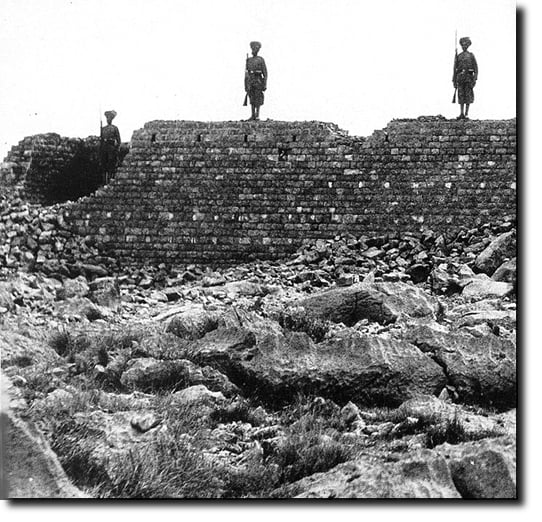
Regions of Asia, from Afghanistan down through northern Pakistan, have always been a problem for military forces. Go as far back as you like and you'll find tales of armies and governments failing to control the border areas by force. In the late 1800's it was no exception, the area was called the Northwest Frontier, and was still causing issues as late as the 1930's (and it had a small part in tank development that I hope to cover at a later date). The Tirah Valley stretches south from the Khyber Pass, and as such is a main trade route. In 1897 the local Afridi tribesmen began attacking merchant caravans travelling this route. To stop these attacks the 36th Sikh Regiment was deployed to the area. At the base of the valley ran the Samana mountain range. On top of this were two British built two forts, Lockhart and Gulistan. These forts were several miles apart and separated by bad terrain. Each fort had roughly a regiment (200 at Gulistan and 300 at Lockhart) in it. As they lacked the ability to communicate a signals fort was built in between. This fort was called Saragarhi. A tower in the middle of the fort housed a heliograph to communicate with its neighbours.
36th Sikh's
Through out August some minor skirmishing happened with local tribesmen taking the forts under fire once or twice. On one occasion a large attack was launched against Fort Gulistan on the third of September. A relief column left Fort Lockhart, but by the time the column had arrived the attack was defeated. As it made its way back a small detachment of men was left to reinforce Fort Saragarhi.

On September the 12th the local tribesmen were back, reinforced themselves they numbered between 10,000 and 14,000 men. To sever communication between the two forts they launched an all out attack on Saragarhi. Inside the fort were 21 men, carrying nothing more than their personal weapons. At this time it would have been a lever action rifle, the Martini Henry (the gun from the film Zulu).
Local Tribesmen from the region
Upon seeing the horde approach the regiment's commanding officer gave permission for the 21 defenders to retreat. However if they retreated it would mean that the route between the two forts would be severed, and Fort Gulistan would have been cut off. To a man, all 21 soldiers volunteered to hold their position to the last.

Havildar Ishar Singh was in command, he and 19 of his men took up firing positions around the wooden gate. One soldier was dispatched to the heliograph tower to maintain communications. At 0900 the first assault began. Havildar Ishar let the initial rush come within 300 yards before ordering his men to open fire. They then kept up a constant, steady and deadly volume of rifle fire. The Sikh's inside kept up a withering hail of gunshots that kept the horde of tribesmen from closing with the fort.

The stiffness of the defence held despite some casualties from return fire. The man up in the heliograph tower kept to his duties despite his exposed position. After a long and protracted gun battle the attackers fell back, but tried a new tactic. They called for surrender making lavish promises including survival. The Sikhs refused.
At Fort Lockhart a relief column was formed and moved out. However by now the attackers had taken up blocking positions and the relief column was forced to turn back.
Saragarhi after the attack
Throughout the morning attacks continued, each one forced back by the defenders. By midday around seven separate assaults had been bloodily repulsed. However the strain was beginning to tell on the defenders and only ten men remained including the injured Havildar Singh. By 1400 the defenders were almost out of ammunition. At 1500 the attackers tried a new tactic, they set fire to the scrub to create a smoke screen, under the cover of the smoke they began to get into some dead ground on the side of the fort and managed to create a breach.
Fort Lockhart was higher than Saragarhi and could see what was happening, and flashed a warning to the defenders. Two men and the wounded Havildar Ishar moved to cover the breach. Utterly out of ammo now the three of them fixed bayonets and charged the attackers whom had made it through. But overwhelming numbers meant it was hopeless. With the manpower thinned at the main gate the attackers mounted a final assault that forced through the weakened line.
Havildar Ishar tried to hold his ground while the rest of his men retreated to an inner defensive line however the surge of attackers swept over them. One man whom had been wounded earlier in the fight was holding the Guardroom. He managed to fight off four attackers, despite bleeding heavily from his wounds. Rather than lose any more men the attackers set fire to the guardroom.

By 1530 there remained only one defender. Sepoy Gurmukh Singh had been stationed throughout that day on the heliograph tower communicating with Fort Lockhart. His final signal was asking for permission to quit his post, take up his rifle and attack! He was instantly given permission. From Fort Lockhart they watched as Sepoy Gurmukh packed the fragile heliograph into its case, picked up his rifle and launched himself at the enemy. They saw him kill about 20 in his final charge.

The days fighting had brought the rest of the regiment the time it needed. Although the tribesmen attacked Fort Gulistan they'd been delayed too long and a larger relief force arrived, linked up with Fort Lockhart and then broke the siege of Fort Gulistan defeating the attackers.
All 21 defenders (Full list of names and numbers) were given the Indian Order of Merit, the Indian equivalent of the Victoria Cross.


Sunday, September 7, 2014

You Disston my tank?

You are probably all aware of the infamous Bob Semple tank, from New Zealand. They were described in the Evening Post as "Powerful machines".  When first introduced to the public in March 1941 this is what the newspaper had to say:
"[...]and as tanks they have immense power. Not only can they climb a grade of 1 in 2, but they will travel through water over four feet deep, traverse an embankment four and a half feet high, smash through gorse hedges, scrub, and saplings up to six inches in diameter, and move across country where roads do not exist. Their armament consists of a number of quick-firing guns. Each tank has a crew of eight, and normally carries 25,000 rounds of ammunition. In addition there is room for the carriage of troops and ammunition in safety over country that might be under enemy fire."
This attempt at public relations soon failed as the public caught their first glimpse of the Bob Semple. It was an ungainly machine lashed together with whatever materials could be sourced for its armour. The rapid firing guns were nothing more than machine guns.
However mad the idea, it did have some merit. The Bob Semple bodies were stored around the country and could be fitted to any local tractors in short order if the Japanese invaded, and in most cases a moving protected machine gun is never a bad thing to have, as long as one understands its limitations.

The news story however highlights another interesting thing, the Bob Semple wasn't the first of its kind. The article in the news starts out:

"The genesis of these 25-ton tanks was a photograph taken in the United States and given to Mr. Semple."

Now one can't be sure,but I think we can make an educated guess as to what that photograph was of. I believe it may have been a Disston Tractor Tank. However there is, as always, conflicting information on the subject. Originally designed during the Great Depression, lots of companies were considering how to sell to the world when everyone was in a bad way financially.  Sources differ, some say it was the Caterpillar company, others that it was Disston themselves that came up with the idea, however the result was a Caterpillar model 35 tractor with with an armoured body made by Disston, a company well known for quality steel products, with an emphasis on safes.
What may come as a shock is that there were at least two versions of the Disston tank. The first early version had turret. Later models were simplified, used a shorter length track and had the turret replaced by a small gun shield that protected the gunner.
Armament in both cases seems to have been a 37mm M1916 infantry gun (very similar to the gun of the FT17). Along with that the Disston had at least one .30 Calibre machine gun.
What may surprise you even more is that the Disston tank actually found some buyers. From 1923 until 1927 the only tanks the USMC had were single digit numbers of M1917 6 ton tanks. After those were removed in 1927 it wasn't until about 1933 when the USMC brought a number of Disston tanks. Some sources say six, others sixteen.

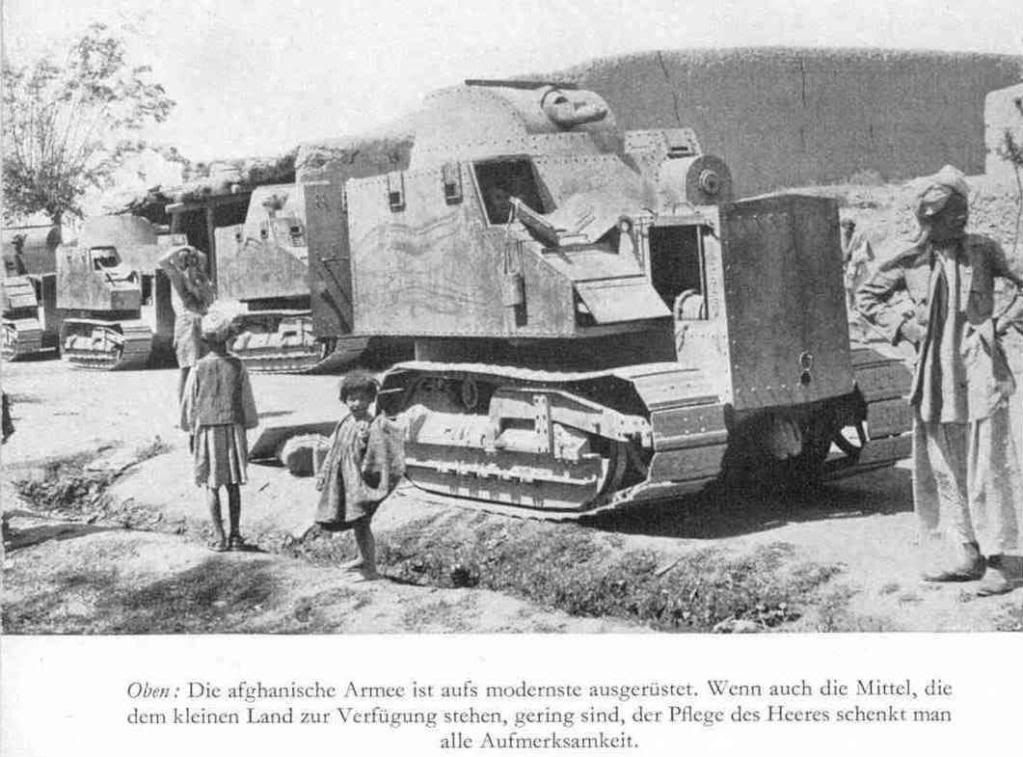
By 1935 the worst ravages of the Great Depression were receding, and the Disston company had to alter their marketing. They now pitched their tank as something that could be assembled in under two hours, implying that it didn't need to remain as a front line vehicle. Again this seems to have been aimed at less affluent countries. One order was placed by China, although the order seems to have been cancelled in 1935. In the same year the first deliveries were made to Afghanistan. The exact number delivered isn't known, but at least five can be identified in photographs. Some sources suggest completed tanks and a smaller number tank bodies were delivered.
Four Disston's in Afghanistan
Despite Afghanistan's turbulent history at least two Disston's still survive and as far as I can tell are still awaiting rescue in Kabul scrap yards.
There is one other group of tractor tanks left to talk about from the period. However sources for them are even harder to find than stuff on the Disston. In Russia during Operation Barbarossa a factory at Odessa is reported to have converted several tractors into tanks, which had mixed effects on the German invaders. The sources are so sparse, and have so little detail its almost impossible for me to verify it. So what I think I'll do is link to the Wikipedia page on the subject and you can make your own mind up.
What is certain is there are a large number of photographs of Soviet tractor tanks, of different models. So its likely that some did see combat to some degree.

Wednesday, September 3, 2014

[WoTB] Draft Specs for Android


While we are getting ready for WoT Blitz testing on Android, below are draft specs to launch the game on devices that run Google's operating system:

  • OS: Android 4.0+
  • GPU: Mali-400MP, Adreno 320, PoweVR SGX544, Tegra 3 or better
  • CPU: 2-core @ 1200 MHz or better
  • RAM: 1GB or better

Especially at this early stage meeting the minimum requirements doesn't guarantee smooth play. So the more powerful your device, the better.

Sunday, August 31, 2014

Unconquerable!

Sorry to say, today I'll be talking a bit about World of Tanks, I know some of you might be put off by this, but bear with me. There's plenty of history and new research! All this comes from documents held at the national archives at Kew.
 As you know World of Tanks is transferring to HD at the moment, and with that the tank's armour gets reviewed and brought as close as possible to its historical level. Well at the moment the FV214 Conqueror is undergoing its HD treatment, and so we were tasked with looking for armour values. Some of you might already be reaching for Google, muttering about having already seen an armour profile for the Conqueror, well yes and no. There are plenty of guesses about the Conquerors armour level, but nothing exact. Equally there's some evidence to suggest that the turret casting isn't a uniform thickness, with the armour basis (The LOS thickness) being constant, but the actual thickness being varied depending on the slope.
A naked Conqueror turret
Of course the usual answer is to dispatch someone to spend a fun day crawling all over a Conqueror with a thickness gauge and measure the armour. Here's where it gets interesting. Wargaming has tried at least three (maybe more) times to measure the Conqueror's front turret. Each time it was a different person, on a different Conqueror with a different thickness gauge. These are not people who are new to the job either. Each time they've not been able to get a reading. Something in the way the turret is cast has been preventing an accurate measurement being taken.

That's where I came in, Although I do have a local Conqueror, I've not got a thickness gauge or any experience of using it, so the likelihood of me being successful is nil, but what I could do was start combing archives for a primary source answer. I did find some interesting stuff but no armour value. Again the mystery deepens. There isn't a given value. Even on documents that list all the other armour thickness, the frontal turret thickness isn't given, just the level of protection it is required to give.

But first, lets talk about the Conqueror's early life. In the late 40's the British opinion was that armour had the upper hand in the armour vs gun battle, and looking at Soviet tanks of the time they were concerned about tank armament. The British were facing a dilemma. On one hand they needed a weapon with a high enough rate of fire to "suppress" enemy positions during an attack, this of course was entirely suited to guns such as the 20 pounder or the US 90mm. But both those guns were deemed inadequate against the latest Soviet armour. The answer was obvious, looking back at the Second World War they could see a system that had worked, the Sherman Firefly and 75mm armed Sherman's that had made up a large chunk of the British armoured force.
So the plan was formed to give Centurion regiments a 120mm armed Centurion. Initial trials resulted in the FV4004 Conway, and it was foreseen that over time the tank could be developed into something with a lower turret.
As an aside, its curious to note that despite the perceived issues in 1948 the British were looking at developing a new infantry tank with utterly ridiculous armour (400mm-350mm) and only a 77mm gun.
Now I need to quickly explain the way the British armour organisation was seen in this period. Armoured regiments were seen as mobile striking units, used for the attack. RAC regiments were viewed as defensive in nature.
The Conqueror was to be grouped into RAC regiments, with Cromwell's as command tanks, and armoured regiments would be equipped with Centurions with 20 pounders and FV4004 Conway's. However the Conqueror production and development went a lot faster than had been foreseen, and therefore the plan changed to one squadron in each RAC regiment and one troop in each armoured squadron would be converted into Conquerors. This resulted in a total requirement of 250 tanks needed.
Right from the start the Conqueror came under fire. First was the army in 1949 complaining about the protection levels and the poor ballistic shape of the Conqueror's turret. One proposal was to remove the gunner to improve the shape of the turret but this was thrown out for two reasons, first of all two man turrets were a bad idea. Secondly it would remove one of the Conqueror's big advantages, it was one of, if not the first tank to have hunter/killer ability. If you don't know what that is I'll explain. While the tank's gunner is engaging an enemy tank, the commander is free to look about and select a follow on target, as soon as the gunner has finished with his target he can instantly and effortlessly switch to the target the commander has highlighted. This allows for a much faster and rapid engagement of targets.

Note the direction the Commanders cupola is facing.
The next attack was the other services whom started complaining about the cost of the Conqueror program, and it took the defence Minister's personal intervention after a meeting with the army to lay that issue to rest.

But back to the armour values. The first big surprise was a 14mm Burster plate attached to the hull. This stand off armour was for the role of detonating HEAT and HESH warheads away from the hull. Some of you might ask why you've never heard of this before? Simply because it wasn't fitted in peacetime but was held as a theatre reserve to be deployed in the time of war. The other obvious question is how would that effect gun depression over the front hull? One suggestion was to shave 10mm of armour off the front slope to improve the depression, but that was never implemented. On the Conqueror although the gun could depress to -7.5 degrees, beyond -5.5 degrees a limiter kicked in that prevented the gun from being laid or used. This was in place because the Conqueror had a nasty habit of sticking its gun barrel into the ground. This was caused by the huge length of the L1 120mm barrel, which swung about a lot preventing it from firing on the move. See this video for an example, notice how much the gun barrel bounces around:
 
(video should start at 20 seconds in, if not that's where you want to be)

But what of the turret armour, the thing that set me off on the trip. Well the requirement was to be immune from the Soviet 100mm gun at point blank range through an arc of 60 degrees (30 degrees either side of the gun barrel). However after testing the best that could be achieved with the turret was that level of protection through half the required arc. This does allow us the ability to make a guess on the required thickness, as the documents helpfully included a table of Soviet gun performance.

But the issue remained that the turret wasn't very well armoured. That's when I hit gold. There was a proposal for a new better shaped turret, with drawing!
The gunner has been moved to the enlarged cupola, so the gunner and the commander are side by side. You'll note that the cupola is actually very well protected with a steeply sloped chunk of armour. The armour thicknesses are also given. Frontal protection is 13.5" with the sides offering 7" of protection.

And to close off, here's some follow on data on the Conqueror, that's just to help you to form a picture of the technical abilities of a Conqueror.
Turret traverse speeds were measured and found to be between 22-24 seconds for 360 degrees. Maximum elevation of the gun was 15 degrees. Reloading the gun took seven seconds and the road speed was 21.3 mph.

Wednesday, August 27, 2014

[WoTB] Version 1.2 is Now Live

Version 1.2 for World of Tanks Blitz (iOS) is now live for RU, EU, NA, Asia regions.


Monday, August 25, 2014

[WoTB] Weed for Blitz

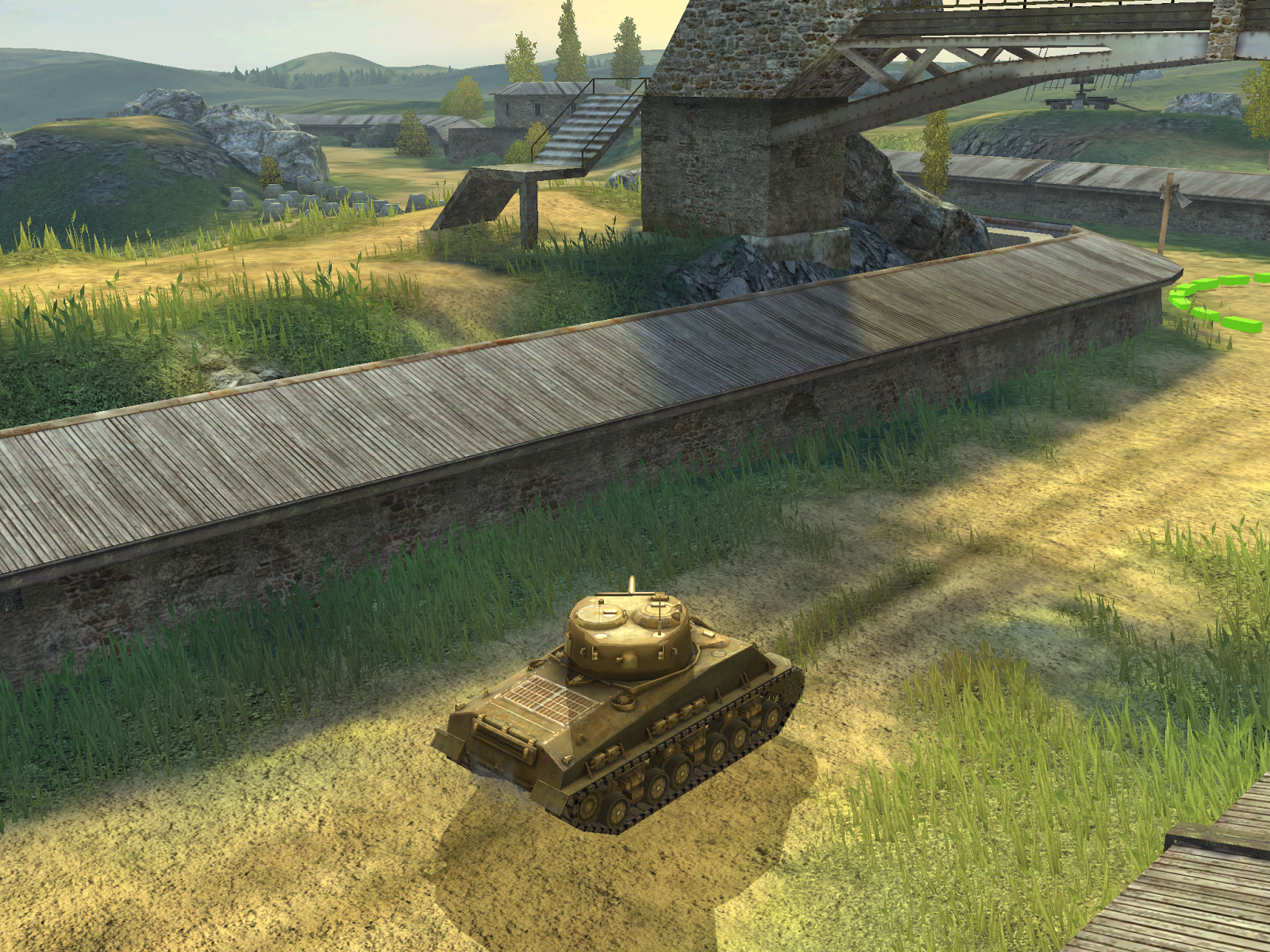
Upcoming 1.2 update for World of Tanks Blitz is to feature a set of visual improvements, the biggest of which is realistic grass. In 1.2 it will grow only on tutorial map, while the rest of the maps will be fully planted in 1.3. New grass will be supported by the following devices: iPad Air, iPad mini Retina, iPhone 5s.


Sunday, August 24, 2014

23rd at Mons

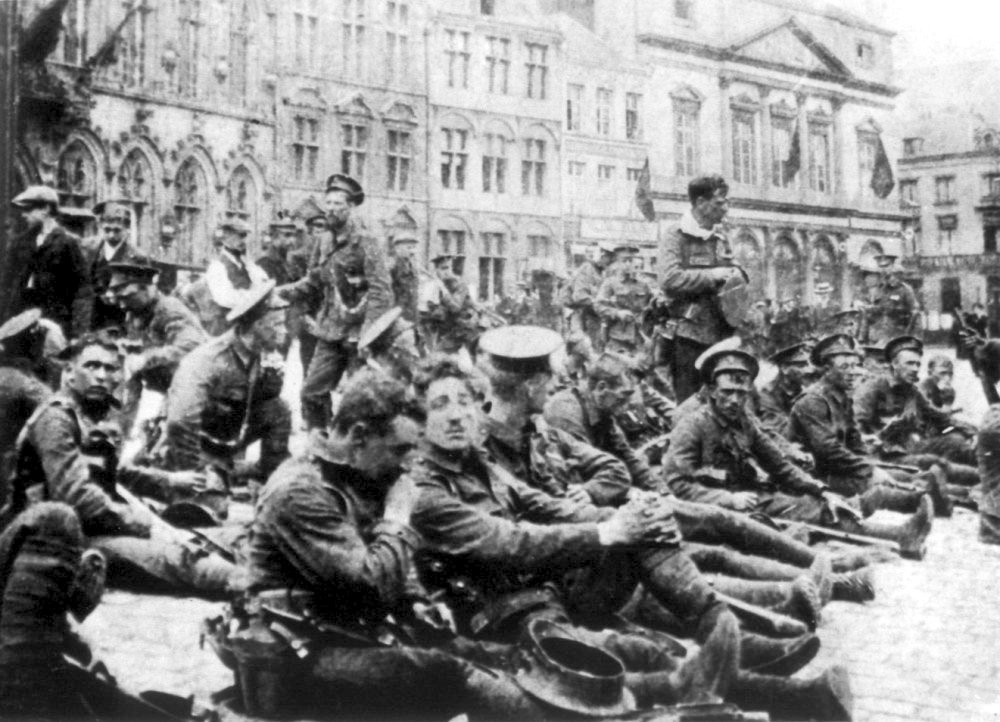
Twenty days after war was declared on Germany the British forces had moved up to Mons to meet the invading German armies. Even as the British dug in at Mons, the French armies were under pressure from the Germans and retreated past leaving the British flank open. This made the situation untenable even if they held the Mons position. However for the first time since the Napoleonic wars a British and German Army was to be on a battlefield together, only this time on opposite sides.
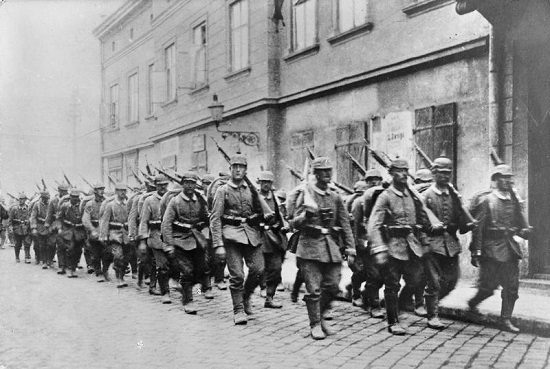
Before the start of the Great War, British officers attended a German exercise which demonstrated their massed close formation infantry attacks. The British observers were appalled at the thought of what would happen to them against a trained modern army. On August the 23rd 1914 they were proved right.
The Germans launched a massive attack on the British lines at Mons. However they immediately ran into massed rifle fire from the British. The volume of fire laid down by the British line convinced the Germans the British had at least 28 machine guns per battalion. In reality the British only had two. To give an idea of the damage inflicted here are the words of a British soldier:

"Our rapid fire was appalling, even to us. The worst marksman could not miss. As we had only to fire into the brown, of the masses of the unfortunate enemy. Who on the fronts of our two companies were continually and uselessly reinforced at the short range of 300 yards."

The 4th Royal Fusiliers were defending a solid metal railway bridge, called Nimy. They had their machine gun section, commanded by Lieutenant Maurice Dease, deployed on the bridge. The rifle companies were deployed on the canal bank. Both guns were in sandbag positions so cramped that there was barely enough room for the crews.

The first contact with the Germans was when a five man cavalry patrol was challenged by a sentry. The Germans turned to flee, but all five were hit by the sentries fire, the four soldiers were killed by the rapid firing sentry, and the officer wounded, and taken prisoner.
When the Germans attacked at about 11am, they suffered terrible casualties, both from the riflemen and from the machine gun section. However the Germans had other tricks of their own. Another new weapon was the aeroplane. The Germans used these to guide their artillery onto the British line and began to pound them, while mounting larger and more vicious ground attacks.
Lieutenant Maurice Dease
Lt Dease by now had been overseeing his guns, even crossing the exposed bridge to fetch more ammunition. Every time a man was hit or wounded, they had to be removed from their position in the gun crew before a replacement could take over. By the time the last, and 23rd, man of the machine gun section had been killed or wounded Lt Dease had been wounded at least three times. Each time he'd refused evacuation as long as one of his guns was still able to fire. At this point Lt Dease manned one of the guns and carried on shooting on his own in the corpse littered gun position.
While manning the gun Lt Dease was hit for a fourth time, but still he continued to fire. Finally a 5th wound rendered him unable to man the machine gun. Lt Dease was evacuated to the rear, but died from blood loss shortly afterwards.
Nimy Bridge is in the background
Now with the Germans pressing closer the battalion had lost its machine gun section and was now under massive pressure. A call for volunteers went out. At this point Private Sidney Godley stepped forward. 
Private Sidney Godley
It should be remembered that a Vickers HMG in operation not only has its muzzle flash to give it away, but also a cloud of white steam emanating from its position to give the enemy something to aim at, and this probably accounted for the massive casualties suffered by the gun crews.
Despite this Pvt Godley manned the Vickers gun and it began its work again.

By now the casualties and pressure from the Germans was so great the 4th Royal Fusiliers had to withdraw. About 1400 they began to pull back. Pvt Godley stayed in position firing away despite getting hit twice himself. One wound was a German bullet hitting him in the head and becoming lodged in his skull.  Meanwhile his regiment continued to pull back. Eventually about 1500 the withdrawal was complete. However Pvt Godley was still in position, alone, firing at the Germans and holding up several divisions. Eventually Pvt Godley's machine gun ran out of ammunition. Pvt Godley unlocked the gun from its tripod, picked up the hot weapon and smashed it several times against a bridge stanchion and then he heaved the gun into the canal, all to prevent its capture by the Germans.
He then retired after his comrades. However once on the other side of the bridge he was captured by the Germans, whom gave him medical treatment. Pvt Godley then spent the rest of the war as a POW.
Both Lt Dease and Pvt Godley won Victoria Crosses. It should be remembered that there were other medal winners on that day, such as another VC and on the German side a Private Niemeyer who leapt into the Mons canal and swam across it in the face of British gunfire to activate a swing bridge, allowing the Germans to pour across. And so started the retreat from Mons. One thing to remember about the First World War, is that contrary to popular ideas it had fairly large sweeping battles of movement, and it was only the stalemate in middle part of the war that had the trench warfare.

Sunday, August 17, 2014

A Bad Day

Tilly-sur-Seulles was one of the fiercest battles the British faced in Normandy. It was on the eastern end of a defensive line held by the elite Panzer Lehr Regiment.  The village held out for a number of weeks and involved many engagements. The final capture of Tilly-sur-Seulles was completed by the 2nd Essex Battalion which had had a bad time in Normandy.
Looking for mines in the aftermath of the battle
The 2nd Essex was landed on D-Day, and as British forces pushed inland it was moved up with the rest of the 56th Infantry Brigade to provided the needed additional infantry to the 7th Armoured Division.  The need for infantry was due to the Bocage country.  The 2nd Essex was sent with the 5th Royal Tank Regiment through Bernières-Bocage to cut the Tilly-sur-Seulles road. On their way they had to size a place called Verrières Wood.

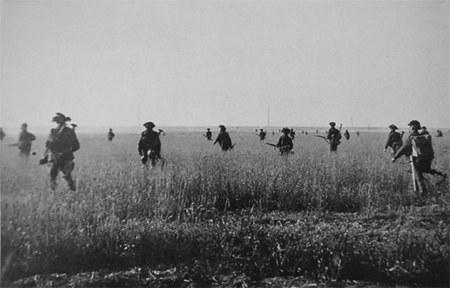
From the 2nd Essex's position they had to cross 1500 yards of open ground, and that was uphill. Verrières Wood stretched from the crest line down the other side of the hill, and was in a perfect reverse slope position. The first 1400 yards was an open cornfield, the last 100 yards didn't even have the half grown wheat as cover as it was just a meadow.
Verrières Wood is the line of tree's in the distance, this was the view that greeted the men of the 2nd Essex.

There was meant to be tank support, however it never showed up, mostly in part due to confusion within the 7th Armoured Division as to their role.  At the same time as the 2nd Essex was planning its attack the 7th Armoured had been tasked with an end run through a gap in the German lines.  They were to pass around the western flank of the Panzer Lehr line, and to their date with destiny, as after their movement they were to end up a place called Villers-Bocage.
So at 1800 on the 11th of June, the 2nd Essex moved out expecting tank support. In perfect formation they waded through the corn, like a week earlier they'd waded through the Normandy surf.
An artillery bombardment was falling on the woods to give them cover. After the first 500 yards nothing had happened, the tension was rising as they marched forward. The corn field was brightly light by the sun in the pure blue sky, if the Germans were in the wood they couldn't fail to miss them.
After another 500 yards the Germans revealed their positions. Showers of mortar bombs and tank HE started landing along the line. The men of the 2nd Essex continued to stride into the haze caused by the barrage, firing from the hip as they went. Whenever the scream of incoming shells was heard the line would throw itself flat, seconds after the explosions they'd scramble right up and continue advancing.
When they entered the meadow German infantry and machine guns began to open fire, by now the casualties had been heavy and there were holes ripped in the neat skirmish line. As the remains of the battalion closed with the Germans they had bayonets fixed and ready to assault the German position. But the Germans withdrew suddenly.

The English battalion pushed through the wood and found the Germans on the other side. Some had taken up defensive positions in a small farm that was assaulted and cleared by a single platoon.
However the Germans had a sizeable force in the next line of trees, so the Essex men held their position and dug in.

As German forces often did they launched an immediate counter attack. A battalion of tanks rushed at the battered Essex battalion. With only PIATs to stop them they tried their best but were running out of ammunition. The German tanks simply overran the line. However, the English soldiers held their ground, dug into simple slit trenches the battalion commander called the artillery down on his position, knowing his men would be protected by the trenches.
Equally at this point the Germans were running low on ammunition and were using AP rounds from their main guns in desperation. The dogged resistance caused the initial German attack to fall back. They carried on assaulting throughout the night, including at one point bringing up half track flamethrowers.
In the early hours of the morning the battalion anti-tank company deployed forward.  At about the same time a platoon of M10C Achilles was brought up to the front. It's a matter of debate why the AT guns were not brought up sooner, and while the Battalion Commander was removed from post overnight for this error, one should remember the exposed advance and the fact that tanks were rampaging around inside the wood, and should one of those meet the Carriers with their guns limbered the results would have been deadly.

As morning approached the battalion Padre appeared at the front. The vicious fighting had been raging all night and numerous Germans had been cut down as they advanced, many were wounded and still in no-mans land calling out for help. The Padre began to venture out in the darkness, alone and unarmed, to rescue or if they were too badly wounded tend to them.

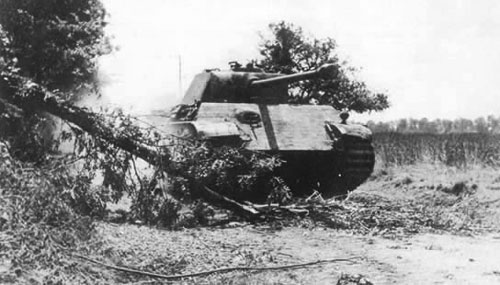
Later that morning the anti-tank company formed a screen, allowing the rest of the battalion to withdraw. After the infantry had swept their line of advance and pulled back the Carriers were bought up and hitched to the guns. As they did so the Germans spotted them and their withdrawal. Several Panther tanks began to take shots at the Carriers, however all the anti-tank company made it away without a casualty.
By the time the 2nd Essex reached safety the three infantry companies were reduced to the strength of just one, and a large portion of the officers were amongst the casualties. Over the next week replacements began to fill out the ranks. On the 17th the 2nd Essex was detailed to capture Tilly-sur-Seulles. Several other assaults by infantry regiments had been put in against the village over the previous week, and all had been repulsed.
This time however supporting attacks covering the flanks would also be launched, and the 2nd Essex would be joined by 81st Assault Squadron. The 81st was equipped with the Churchill AVRE. They'd been part of the assault waves on D-Day, and had lost four tanks, two had drowned and two had been knocked out by enemy action.
The assault started at 1600 on the 17th of June. As the tanks and infantry pushed down the road fierce fighting erupted. One of the AVRE's was nearing the cross roads, spraying machine gun fire into likely looking bushes. Its gunner was Sapper Sydney Blaskett. Suddenly just in front of the tank a Panther appeared at the short range of only 50 yards.
Load Dustbin!
 Under orders from his commander Spr Blaskett rotated the turret round.  The cavernous maw of the 290mm Spigot Mortar was stuffed with the 40Lb "Flying Dustbin". With a bang the heavy projectile was hurled towards the Panther. It whirled through the air, arcing straight towards the point of aim. Spr Blaskett had aimed his shot at the Panthers turret ring. The round exploded after hitting a telegraph pole three feet away from the Panther. When the explosion had cleared the Panther was still, and never moved again. The blast from the round had put it out of action.

Friday, August 15, 2014

[WoTB] First Major Update for Blitz

Update 1.2 for World of Tanks Blitz has been submitted for Apple's review, meaning the release date is within 2 weeks from now. 

Below are the update notes:
  • Added new desert map - Oasis Palms (two more maps are coming in 1.3)
  • Tier VI-VIII vehicles are added in tech trees - SU-100Y, Dicker Max, Panther M10, Lowe, T34. All of them can be purchased for gold.
  • Added quick auto aim control that enables/disables auto aim (aiming assistance) directly in batle. Works independently for arcade and sniper modes. Very convenient thing, using it myself.
  • Added display for discounted shop items during specials
  • Added new notifications for garage header. The most important of those are battle results and gifts. E.g. if you left the battle for garage, you will see the popping header with the results.
  • Added automated chat censoring.
  • Added ability to share battle results on Facebook.
  • Added new sound effects: engines, transmissions, breaking objects, enemy tanks on fire, etc
Balance and gameplay
  • Increased net credit income (income minus expenses) for premium tanks: Lowe +20%, T34 +22%, Dicker Max 19%
  • Decreased battle tiers for tier III and IV vehicles, and T2 Light to +/-1. It means that all tanks up to tier IV can only meet vehicles one tier below and above. Being unplatooned ofc.
  • Decreased prices for equipment.
    • tier 1: 20000->1500, 40000->3000
    • tier 2: 30000->5000, 60000->10000
    • tier 3: 40000->12500, 80000->25000 
    • tier 4: 50000->35000, 100000->70000
    • tier 5: 75000->60000, 150000->120000
    • tier 6: 100000->90000, 200000->180000
  • Decreased prices for consumables.
    • tier 1: 1000->500 (only 3 basic consumables now available)
    • tier 2: 1000->750, 3000->1500, 5000->2100
    • tier 3: 1500->1000, 4000->2000, 7000->2800
    • tier 4: 1500->1250, 4000->2500, 7000->3500
    • tier 5: 2000->1500, 5000->3000, 9000->4200
    • tier 6: 2500->1750, 6000->3500, 11000->4900
    • tier 7: 3000->2000, 7000->4000, 13000->5600
    • tier 8: 3500->2250, 8000->4500, 15000->6300
    • tier 9: 4000->2500, 9000->5000, 17000->7000
    • tier 10: 5000->3000, 10000->6000, 20000->8400
  • Increased experience to get 100% crew skill.
    • tier 1: - 
    • tier 2: 2000->2700 
    • tier 3: 5000->7600
    • tier 4: 14000->18300
    • tier 5: 27000->36000
    • tier 6: 50000->83000
    • tier 7: 81000->139000
    • tier 8: 125000->250000
    • tier 9: 173000->455000
    • tier 10: 240000->540000
  • Rebalanced tier I-III automatic guns. Decreased cassette damage and reduced reload time to maintain DPMs.
Improvements
  • Reworked battle tutorial: added reaslistic grass, animated trees, changed tanks. In future updates these visual improvements will be available for all maps.
  • Previously researched modules are now mounted automatically for newly purchased vehicles. 
  • Battle results for 10 battles are now saved on mobile device and available even after the game restarts.
  • Changed condition for Patrol Duty achievement: 4->3 vehicles.
  • Updated interface graphics for shell icons, menu icons (left-side panel), vehicle specs icons in upgrades screen, directional arrow in sniper mode, etc
  • Updated some interface elements for Retina resolution.
  • Improved layout for chat interface on iPhone.
Bugfixes 
  • Fixed incorrect marker for destroyed T40 tank.
  • Fixed textrures for Ferdinand tank.
  • Fixed bug with unpredictable behaviour of auto-aim assist when the reticle would switch from stationary target to another passing enemy tank
  • Volume level setting is now saved after the game restarts.
  • Fixed bug with synchronization that would bring back the login screen
  • Fixed description for Hunter and The Lion of Sinai achievements. Removed vehicles that are not in the game yet.
  • Fixed icon for Raseiniai Heroes' Medal.
  • Fixed bug when renamed player couldn't enter chat.
  • Game now works in background mode for up to 3 minutes (connection to server is kept, you can minimize the app now). 
  • Optimization for texture quality on iPad 2, iPad Mini, iPhone 4S. The game should be more stable on those devices and crash less. 
  • Fixed multiple crashes.