Purpose of this blog

Dmitry Yudo aka Overlord, jack of all trades
David Lister aka Listy, Freelancer and Volunteer

Sunday, November 2, 2014

.45-Zero

This article is in essence two stories, but one couldn't have happened without the other, and I'm sorry to say, one of them is not a happy story.

Bombing raid over the Pyinmana bridge
On March 31st, 1943 four aircraft of 9th Bomb Squadron of the 7th Bomb Group were sent on a mission to destroy a railroad bridge at Pyinmana, Burma. The squadron were in B-24's, and as they approached Magwe they had the bad luck to stumble across a flight of Japanese fighters.

KI-43-II
The thirteen KI-43-II's (nearly all allied accounts claim Zero's) where from the 64th Sentai, and were flying on a transport mission to Chittagong. Leading the flight was the Japanese ace Captain Yasuhiko Kuroe. Cpt Kuroe and another plane targeted one of the B-24's and pressed home their attack, despite the ferocious defensive fire put up by the bombers. The bomber they targeted began to drop out of formation, whilst on fire. Inside that B-24 the co-pilot, Lieutenant Owen J. Baggett manned the dorsal gun while the rest of the crew struggled to put the flames out. However it was obvious they were doomed. The pilot Lt. Lloyd Jensen ordered the crew to bail out.
Lt Baggett
 As they hung in their parachutes Cpt Kuroe and his wingman began to strafe the helpless bomber crew. Lt Baggett was wounded in the arm by the attack. With no other choice he palmed his Colt M1911 pistol and hung limp in his harness, acting dead. Cpt Kuroe brought his fighter round, and throttled back. As he passed the group he opened his canopy, and was flying at almost stall speed.
As he passed Lt. Baggett the American raised his pistol and fired four times. The Japanese fighter peeled away. Lt Baggett and Lt Jensen were both captured. At the time they were the first B-24 pilots captured by the Japanese, and were of special interest. Eventually they were released from solitary confinement and put in with the general population of POW's.
Col Melton
Here the second story starts. Colonel Harry Ripley Melton Jr, was the commander of a squadron of A-36's (dive bomber versions of the P-51). On a mission on the 29th of November 1943, about twenty miles east of the Bay of Bengal, his plane suddenly lost power, and he was forced to bail out at 1000 ft. He too was captured, and while in the same camp as Lt Baggett they got talking. Lt Baggett told of his story, and how he got there. At which point Col. Melton confirmed the story by saying they had found a crashed Japanese plane, the pilot had been thrown out of the airframe by the force of the impact. The Japanese pilot had a single .45 gunshot wound to the head.

Unfortunately there's no other supporting evidence. Even Lt Baggett’s own remarkably slim account when he was official historian for the 9th Bomb Squadron fails to mention the details. Was it just a tale to raise morale while in a POW camp? Did Cpt Kuroe merely pull away in surprise? Or did Lt Baggett make a one million shot? Shots with longer odds have happened before.

Lt Baggett remained a POW until the end of the war. After liberation, instead of returning to his peace time job on Wall Street he decided to stay in the Air Force, and retired a colonel. He died at the age of 85 in San Antonio, Texas in 2006.
Rakuyo Maru
For Col. Melton a much unhappier fate awaited. On 6th of September 1944 he was sent to Japan. He was the only American, in 1318 POW's on the Rakuyo Maru. Six days into the journey the convoy was decisively attacked by US submarines. Sinking, the ship turned into hell and the full horrific story can be read here. Col. Melton was lost at sea, adrift in the Pacific ocean.

Image credits:
Wikipedia, The Command Post (Jan 26th, 1945), Flymag and St Petersburg Times (Dec 5th, 1943)

Sunday, October 26, 2014

The Armoured Soldier

From the moment at Agincourt when a single soldier was killed by a gunpowder weapon, armour protection became more and more impractical. The large scale of issue needed and the cost due to lack of manufacturing meant for most of history the best protection a soldier could wish for was a padded outfit.
This carried on into the first industrial war, World War One. In the early years of that war cloth caps were the norm, however with modern warfare modern mass production arrived and the benefits of metal helmets were realised and issued en-masse.
In the First World War several attempts at protecting the soldier from enemy fire were also tried, the best known was the German Lobster armour. However there were several other concepts tried.
MacAdam shovel in action, notice how the loophole is actually to low to the ground to be used without the mound of earth.
One was the ill-conceived MacAdam Shovel from Canada. It was designed, in 1913, to function as not only a shovel, but also as a bullet shield. The idea being that the soldier stuck the blade of the shovel into the ground, this gave him an armoured screen with a loop hole in it so he could fire at the enemy, while their return fire was deflected by the blade.
You can see how short the handle is on this picture.
To make it bullet proof it was built of very dense and heavy steel. However this was unable to stop enemy fire, and resulted in a very heavy shovel, with a short handle and a hole in the shovel blade.
In reality the shovels never made it closer to the front than England and were finally sold off as fifty tons of scrap at a massive loss to the Canadian Government.
Martel's one man tank. this is the MK2 version, made out of actual metal. the Prototype had been made of wood.
In-between the wars one British officer, Giffard Martel, came up with an idea for a one man tank. The idea is said to have come from a discussion with another British officer who witnessed a French tank attack during the First World War, and the swarm of FT-17's. When Martel pitched his idea it was laughed at, so he cannibalised an old car and rebuilt it at home in the shape of a one man tank. His plan was for each infantry unit to have a handful of these, and they would advance with the infantry giving covering fire. When the difficulties of one man doing all the jobs for the tank arose Martel countered by pointing to fighter pilots doing all the jobs required in their one man vehicles. Martel went one step further and proposed that every infantryman should be mounted in one of these tankettes.
Carden-Loyd one man tankette
As the idea was looked at other companies got in on the act, however the high point for the one man tank was the Dominion Premiers demonstration, in 1926.  The army put several of its machines, including the A1E1 Independent through a demonstration.
Dominion Premiers demonstration in 1926
 In less than a couple of years the idea had disappeared. However the one man tank does have one success story. Martel also built a two man version, and from this starting point you can trace a direct development through to the unparalleled success of the Universal Carrier. The idea of a slow moving tank to support the infantry in their advance could also be said to have resulted in the A11 Matilda Infantry Tank, however the link there is much more tenuous.

Soviet SN-42
In World War Two body armour made another appearance. The two best known are the Soviet armours like the SN-42, or the US flak jackets worn by bomber crews. A less well known version was a Japanese attempt at body armour, looking like a direct copy of the Soviet armour, it was let down by Japanese manufacturing, proving to be extremely heavy and offering no protection.
The British also worked on body armour. During the early 40's the Medical Research Council and the army thought through the problem, and eventually produced a usable armour.
The basic problem was that technology, at the time, couldn't provide armour thick enough to provide protection to prevent high velocity projectiles from penetrating the armour and causing damage. There were also certain places where low velocity projectiles would cause fatalities. Adding to the issue was that the Army had imposed a weight limit. The armour was designed to cover the most amount of vulnerable body parts within the constraints of the weight limit.
The Armour was found to be proof against rifle fire from 700 yards, pistols at 5 yards and Thompson Submachine gun fire at 100 yards.
The armour was mostly used by the RAF and 21st Army Group. There's anecdotal reports of it going ashore on D-Day and fighting through Normandy. It was definitely used during Operation Market Garden.
MRC armour can be seen on the soldier guarding these POW's.
After the war many ideas were tried for body armour, for both police and military uses, such as this police armour:
However its only due to modern technology that effective body armour has been realised.
My thanks to Volketten from the NA server, whom is a real expert in these matters and helped with this article.

Image Credits:
Milart, Wikipedia

Sunday, October 19, 2014

Stug Ace

Hugo Primozic was born in 1914 in Württemberg, Germany to a German mother and a Slovenian father. He enlisted with the German army in May 1934 and joined the Artillery. During the Polish campaign he was part of the 152nd Artillery Regiment of the 52nd Infantry Division.
Hugo Primozic
After serving in the French campaign, he rotated through several reserve and replacement positions including a posting at the Artillery school in Jüterbog. After graduating, he was sent to join the 667th Sturmgeschutz (assault gun) battalion. He was given command of a platoon of Stug assault guns in the 2nd battery of the 667th.

After bitter fighting in August and September, the 667th halted several heavy Soviet attacks near Rzhev but was subsequently pulled back due to heavy casualties. Then on the 15th of September, the Soviets launched another massive attack. Primozic only had his platoon of three Stugs at his disposal which he promptly moved forward to face the assault.
As they approached under cover, Primozic halted his platoon and dismounted to scout out the situation facing his small force. Once this was complete, he moved his Stugs into concealed positions on the flank of the advancing Soviets tanks.

As Primozic’s platoon moved into firing positions, one of the Soviet T-34s apparently spotted Primozic and quickly swung its turret round and fired. By luck, despite the short range of the shot, the round bounced off. The Stug fired a heartbeat later destroying the T-34. Primozic's platoon began to pour fire into the sides and rear of the Soviet tanks. As the Soviets began to return fire, Primozic ordered his Stugs to pull back from their previously concealed positions and relocate to new firing positions to the left of their location. The Stugs low profile, speed and concealed positions made this manoeuvre possible despite enemy fire.
While Primozic had been moving, the Soviet tank had begun advancing towards his platoon and had closed the range so that the nearest T-34s were now only 300 yards (275 meters) away; well within optimal firing range for a T-34. Additionally, his platoon spotted KV-1 heavy tanks moving up to support the stalled T-34s. His Stug was hit by a round from a KV-1 which did no damage however Primozic’s gunner likewise bounced his shot off of the KV-1. It was now a straight reload race as the first to reload and fire accurately would likely destroy the other. The Stug's 75mm roared and the KV-1 shuddered to a halt gushing smoke.
The fighting continued with the heavily outnumbered platoon continuing to inflict damage on the T-34s and KV-1 heavy tanks until the Soviets began to retreat. The platoon had flanked the Soviet advance and used the covered, rolling terrain to maximum advantage to halt the soviet attack and destroy over 24 tanks during the engagement.

From the 15th through the 28th, Primozic and his platoon continued to fight with their battalion in repelling repeated Soviet attacks in the Rzhev vicinity. On the 28th of September, Primozic’s platoon was assigned to cover the extreme flank of their division and they proceeded to hold their position against repeated attacks conducted by Soviet tanks with infantry support. Primozic’s Stugs held their ground until they had literally fired off all of their ammunition and then attempted to withdraw to avoid being encircled. Before his platoon could disengage, Primozic left his vehicle while under fire with a steel tow cable and attached it to an immobilized Stug in his platoon to tow it from the battlefield using his own vehicle. Upon returning to his Stug, he personally covered the successful withdrawal of both vehicles against infantry attack with a machine gun.

In the five months from September 1942 to January 1943, Hugo Primozic destroyed 60 enemy tanks and was awarded both the Knights Cross of the Iron Cross and the Oak Leaves. Hugo Primozic was the first non commissioned officer in the Wehrmacht to be awarded the Oak Leaves to the Knight’s Cross and one of only seven NCOs in total to receive the Oak Leaves.
He received his officer’s commission in February 1943 and served as an instructor until 1945 when his training unit was deployed to face the advancing Americans on the Western front. Primozic was captured by American forces on May 8th, 1945 and survived the war. He died on the 18th of March 1996 in Fulda Germany.


(Following a suggestion last week, I'm trying something new out from today forward, if you don't like it, let me know. To stop the images in articles disappearing, I'll be copying them across to Imgur, and then giving credit to the original website.)Image Credits:
Wikipedia, Bundesarchive Photos and theatlantic.com

Sunday, October 12, 2014

The Ghost of Edward

Nearly a year ago I wrote about Soviet robotic tanks. As with all nations with this sort of research they kept the program a secret. Well its no surprise that other nations started thinking along the same lines and developed their own programs. One of those was of course Britain.

In the early 30's the British Army and the Royal Navy worked together on remote control ships, one project was fitting Coastal Motor Boats with radio control, although that never reached completion. One project that was completed by Mr Evershed of the Royal Navy Signals School was the fitting on an old battleship, HMS Centurion, with remote control to use it as a target drone for coastal batteries.
HMS Centurion as a target ship
From that basis the idea of a remote controlled tank on land grew. The first hint of a remote controlled tank was in October 1935.  As the Air Ministry had a lot more experience with radios and electronics than the Army, the Army inquired if they knew of any reason why a remote control tank wouldn't work up to a distance of two miles from its control station. With the Air Ministries positive reply the Army proposed to set up a conference on the subject and start a joint project.

There is some argument as to whom came up with the idea of the remote control tank. Brigadier Percy Hobart makes the claim it was his idea, however that is based entirely upon a minute in a 1937 meeting being deleted. A review into the UK records conducted in 1946 suggests the idea came from an officer called "Chapham", but fails to credit him with his full name.

On the 5th of December 1935 the first meeting on the subject was carried out, where the basic role was laid out:
  1. To carry out reconnaissance of an area over which an attack may be made. The idea of the remote control tank was to draw fire from enemy guns, so that they may be targeted.
  2. To find out the location of enemy minefields by driving into them and finally to be used as a mobile mine. the explosive charge could also be used to destroy the tank should it be in danger of being captured. A requirement was that it should be controllable from a standard issue army radio set.

The project was codenamed "Edward".

Upon hearing this the Air Ministry declared it would likely take two years to develop. and then both elements of the Air Ministry present at the conference started using the project as a chance to empire build. The Royal Aircraft Establishment demanded an increase in staffing levels, while the Air Ministry itself asked for an extra £5000 in its budget to be taken from the armies allocation. However in 1936 the project was regulated to minor status as the Air Ministry was working on its own project, a rocket powered remote control plane. Of the £5000 allocated to the Air Ministry only £708 of the grant had been spent on the project, of that £638 was for the gearbox.

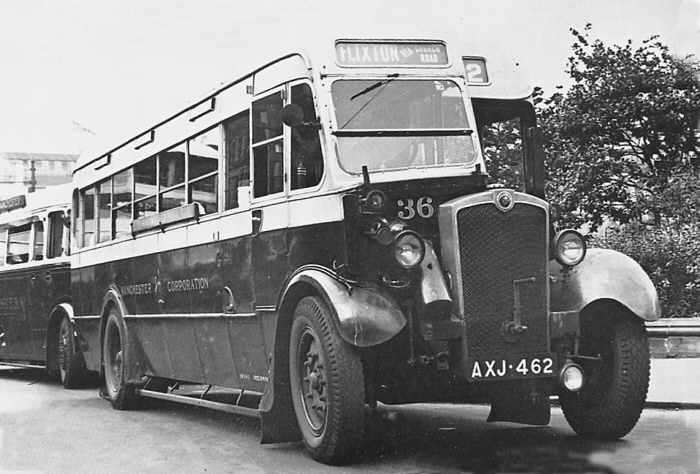
Initial testing found that an automatic gearbox was needed. By a happy stroke of luck one had just been invented by Freeborn Power Converters Ltd, and fitted to a omnibus, where it had completed 28,000 miles without fault.
Best guess at the type of bus fitted with the gearbox.
With the gearbox sorted the rest of the tank was needed. In the end a Light Tank Mk II was used, and fitted with a Rolls Royce engine. Visual changes over a normal Mk II Light Tank were two bulges on the glacis plate to hold steering linkages. Internally an automatic starter was installed.
Standard Light tank MKII
In July 1936 the Air Ministry then announced its pet project was finished, and that it would need £4880 for 1937 to work on Edward. Once again the Army paid, however work was moving forward and in February 1937 an issue with the steering control was solved. However the Army was getting restless. With its budget going missing and no apparent feedback it led to Colonel Giffard Martel sending a very strongly worded series of letters enquiring how the project was progressing. The Air Ministry managed to placate the angry Army, by pointing out that by May 1937 the radio equipment was working well under laboratory conditions. However the mechanical side of things wasn't going so well. The brakes were far too powerful slamming full on as soon as they were engaged. However conversely the servos powering the gear select and the track drives were too weak. The Air Ministry announced that Edward would be complete in 3-6 months.

Edward was privately demonstrated on 1st of June 1936, and announced ready for full demonstrations on 2nd July. However those demonstrations didn't take place until the following year. In the 13 Jan 1937 demonstrations the witnesses were very impressed by the performance of Edward. However a question was raised. Somewhere in the previous year Edward had switched from a project for service to a technology demonstrator. The visiting dignitaries asked where the research project could go from its current high point. One suggestion was to use Edward as target for anti-tank gun training.

However in light of its flawless performance Edward was given a stay of execution. Some additional goals were added, to increase the range of operation up to 3000 yards, the ability to lay a smoke screen (which resulted in an air compressor being fitted) and a safety system that would stop the tank if it didn't receive a signal for more than 30 seconds. Trials at Bovington were scheduled for later that year, and Edward moved back to being a project for a service piece of equipment. The Air Ministry asked for another £5200 to cover development in 1938, which was approved on Christmas Eve 1937.
No.11 wireless set
In late 1937 the Army was developing its new radio set, the number 11 set. It would give the added range needed to reach 3000 yards control, so it was tested out with Edward.  Almost immediately Edward developed its own consciousness, sometimes driving around under its own control ignoring the signals from the control unit.  Throughout the remainder of 1937 and the first half of 1938 Edward continued to display signs of self control.  The issues continued so much that the two establishments involved with the project were looking to either adapt the Queen Bee target drone control gear, or build special purpose equipment.
Queen Bee Target drone
In the end it was found that a certain set of inputs on the No.11 radio would cause excess radiation from the set which was flooding Edwards receiver with fake signals causing the tank to drive itself.  The solution was to use the old No.9 set linked with a No.11 set. And not a moment too soon. On 1st of November 1938 a new demonstration was held.  This time two Edwards performed flawlessly for ten minutes being commended on the crisp highly responsive nature of their movements. The demonstration was brought to a halt when one of the Edwards threw a track.

For some reason at this high point the Edward project was wound up with a notification sent to the Air Ministry to stop work on 14th December 1938. Some discussions were held about fitting Edwards to A12 Matilda Seniors to serve as gunnery targets, although there's no record of this being carried out.

Sunday, October 5, 2014

Horror at 25,000 feet (Part 1)

People occasionally ask where I find the stories I put up. Some I've known about for years, others I stumble across as I'm reading, such is the case today. While researching another story I was reading a newspaper archive, when a story in the column beside the one I was interested in caught my eye, and so here is the story of Ruthie II, a B-17 bomber flying out of RAF Alconbury.
Senior Pilots of 92nd bombardment group
Its no surprise that when Lt. Robert Campbell landed Ruthie II that three of his crew were seriously injured. The plane had been shredded from tail to nose by German fighters. This was on a short trip to Nantes, France. Worse was to follow.

On 26th of July 1943 which was Lt Campbell's fifth mission, the target was a synthetic rubber tyre plant at Hannover. Ruthie II took off from RAF Alconbury and headed out over the North Sea, then turned into the German coast with the rest of the bombers. As usual their escorts had to turn back from lack of fuel, and the German fighters soon fell upon the formation.
The first attack came from 7 o'clock position, the FW 190's riddled the B-17's side. One of the cannon shells flew in the window, narrowly missed the co-pilot and caused massive injuries to the back of Lt Campbell's head, splitting open his skull and splashing brain matter everywhere. At the same time another German fighter made a pass from the front of the plane smashing the window in front of the co-pilot, one 2nd Lieutenant John C Morgan.
Lt Campbell's body slumped forward on the control yoke, and it took all of 2nd Lt Morgan's strength to wrestle the aircraft level. Then much to his horror the corpse of Lt Campbell lurched to life and started punching and clawing at him.
2nd Lt Morgan fought off the pilot, and managed to hold him back with one arm, all the while piloting the heavy bomber. The injury to the back of the head had caused such damage to Lt Campbell that he was entirely delirious.

The same attack that had injured Lt Campbell had knocked out the intercom so 2nd Lt Morgan couldn't call for help. Not that any help was available. The cannon fire had shredded the oxygen system for the waist and tail gunners who were all unconscious from the low oxygen levels.
The dorsal turret gunner was Staff Sergeant Tyre C Weaver Jr. His war had ended with the attack from the FW190. One of the shells had blown his arm off just below the shoulder. In shock, with blood pouring from the wound he dropped from the turret and rolled through a hatch into the navigator's position. There 2nd Lt Keith J Koske saw the injured man appear and grabbed a first aid kit. He tried to inject SSgt Weaver with morphine, however the needle was bent and wouldn't go into the skin, so 2nd Lt Koske started trying to stem the blood pouring from the arm stump. With the limb severed so close to the shoulder he was unable to stop the flow of blood.

Back in the cockpit 2nd Lt Morgan had a choice to make. He could either try to stay in formation, or drop out. As they were still near the coast they'd soon be safely away over the sea, where they could hopefully pick up the fighter escort and return to England. With no gunfire coming from the rear of the plane, 2nd Lt Morgan assumed that the crew back there had bailed out when the plane first dived out of control. 2nd Lt Morgan also had to fend off Lt Campbell, who every few moments would start fighting and trying to take over control of the plane, causing it to lurch out of control until 2nd Lt Morgan could regain control and subdue Lt Campbell.
With that in mind, and considering that there were at least several hours of the mission still to fly and 2nd Lt Morgan couldn't see to his front as the windshield was smashed, its remarkable that 2nd Lt Morgan made the decision to hold his place in the formation and complete the mission.


Part Two is here.

Thursday, October 2, 2014

Tank Race, History style!

I've just got back from Churchill college where I was doing some research, in their rather nice little archive. Now we all know of the Chaffee Race going on, well:

I asked permission to stick this up on the net, and their helpful archivist pointed out it was under crown copyright, not theirs, so ignore the little sticker.
Then when I get back someone pointed me towards this picture of a RAM:
I just couldn't get this classic comedy sketch out my head. I can just see one of the British guys saying:
"I look down on him, because he couldn't beat a Churchill tank."

Of course the US did some Tank racing, only they filmed it.

Tuesday, September 30, 2014

[WoTB] ASAP Video for Blitz

New ASAP video for Blitz dedicated to 1.3 update.


And answering some of the questions to it.

Q. What about British tank line? :(
A. Will come later this year after we add Maus branch for Germans.

Q. When will we see the android version of it...
A. Android is now at beta testing stage on RU region. Release date is not set now and will depend on testing results. Just make sure you've got a solid device, not smth outdated.

Q. When will the 1.3 update be ready?
A. The update is now undergoing Apple review. Should be ready soon.

Q. When do we get camos?
A. They are in plans for future updates in 2015.

Q. When we get french tech tree?
A. Still not decided regarding balancing of high tier autoloader tanks with no armour. Blitz gameplay is different from PC version, and the absence of armour may be crucial. We gonna add Brits first.

Q. When wot blitz is coming to samsung devices?
A. Samsung devices are the ones with high-to-highest priority for Android. See above. 

Sunday, September 28, 2014

Boots over Italy

Living in East Anglia (the bulge on the southeast side of the UK, to the north of London) you're quickly struck by the sheer number of airfields around, all built during the Second World War.  This has lead to the suggestion the UK was one of the worlds largest aircraft carriers during the Second World War, from which a constant stream of aircraft bombarded the German war machine. If this is the case then an escort carrier would have been Malta.
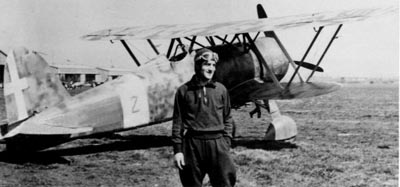
Its well known that planes operating out of Malta caused massive havoc amongst the supplies heading for the North Africa. And that the dogged resistance and perseverance of the people of Malta in the face of overwhelming bombing, drought and starvation led to the island receiving a well deserved George Cross. However there is a lesser known story to be told.  When the Italians opened the siege their front line fighter was the CR.42, which at first glance was utterly outmatched by the Hurricanes of the RAF. However the first few engagements went the CR.42's way as the nimble biplanes were easily able to out turn the Hurricanes, and they were built well enough to take a burst or two from the Hurricanes. However tactics quickly changed and the tempo of the air war stepped up, and the humble CR.42 found itself pushed to one side.
The CR.42 then found itself in another role. From the outbreak of the siege British bombers flew from Malta to attack targets on the Italian mainland and Sicily. Often these would be lone aircraft marauding around the countryside making nuisance raids. Here speed wasn't needed to catch the lumbering bombers. The planes robust construction allowed them to survive the bombers guns and the twin nose mounted 12.7mm machine guns could potentially do serious damage if well aimed.
An example is the battle between Maresciallo Vincent Patriarca, an Italian American serving with the Italian Air Force, and Pilot Officer D. F. Hutt, an Australian serving with 40 Squadron.
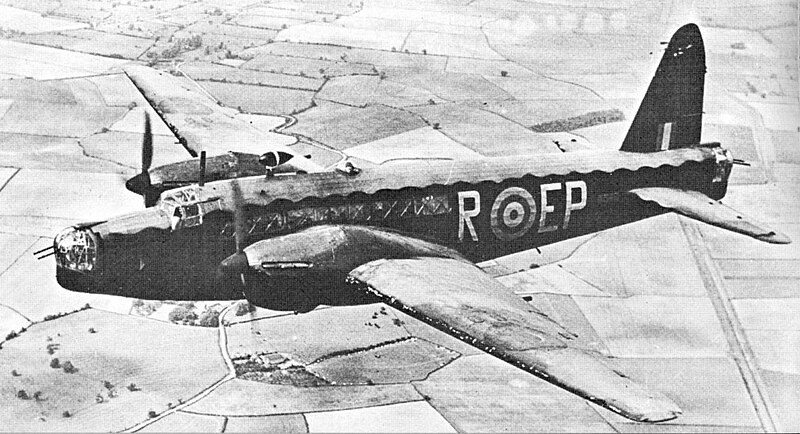
40 Squadron had only recently been converted to Wellington's, starting out the war in Blenheim's. A month after their conversion in October 1940 they deployed to Malta. At 1845 on the 5th of December 1941 twenty Wellington's took off from RAF Luqa. Their target was the Royal Arsenal in Naples. Upon learning of their approach Maresciallo Patriarca took off from Capodichino airfield.

Maresciallo Vincent Patriarca
He spotted PO Hutts Wellington at around 2130, and began an attack. There followed a long protracted fight where he fired nearly all his ammunition before he finally shot the Wellington down. When he landed he found his tail plane had been shredded by return fire, and he was almost out of fuel.
PO Hutt and his flight engineer, Pilot Officer J.E. Miller, were seen to bail out of the crashing Wellington, and later taken prisoner. Of the other four men of the crew nothing is known, however one of the other Wellington's on the raid reported seeing distress lights off the coast, and despite a SAR operation being launched from Malta no trace of them was ever found.

But to close this article I want to talk about a much more daring incident. Earlier in the campaign a pilot called Ken Rees (who was shot down in 1942 and was sent to Stalag Luft III from where he participated in the Great Escape), was flying a solo mission against Naples. On the night of November the 6th over Naples Rees rear gunner spotted a CR.42 in the bright moonlight,  closing on them. Rees immediately reacted by throwing his plane into a dive, only to be caught and dazzled by searchlights. By the time he'd regained his vision he was hurtling above the city at 500 feet. Whilst his wild dive had lost the night fighter, the searchlights still had him pinned, so he took the only course open to him, he flew lower. At roof top height he finally lost the searchlights, at this point in his account Rees remarks about how wide the streets of Naples are, so you can imagine how low he was. Suddenly they flashed out into the middle of the harbour, Rees took them down even lower hoping to sneak out to sea and escape.
Suddenly in the gloom loomed a battleship, and they would pass to starboard. The battleship let fly with everything they had, however the surprise of finding a heavy bomber skimming the waves at practically point blank range meant that all of the Italians fire went wide. Rees' front gunner began to rake the battleship, and in Rees own words:

"As we shot past it full throttle, I could see Joe’s .303 Brownings blazing away. Silly bugger was trying to sink a battleship with a pair of .303s."

Despite this hair raising incident the bomber made it back to Malta safely.

Thursday, September 25, 2014

[WoT] Ensuring Fairplay

Hi again! 0.9.3 update for World of Tanks is now live.

Your feedback on the new things is welcome. Especially interested in the following this time:

A new automated system to ensure fair play

With this update we will be introducing a new feature to deal with unsportsmanlike behavior, such as:

  • Frequent AFKing 
  • Leaving the battle


Sunday, September 21, 2014

The new iTank

 Apologies, Bit of a short one today, as I'm off on Honeymoon, and don't have much time.

Earlier in the year I was combing the Archives and tucked away in the back of a document about the FV201 series, unseen for a number of years due to miss-filing, I found a few pages talking about a tank I'd never heard of.  Having a lot to do that day I quickly took some photo's and got on with it.
Under later review I realised I'd found documents talking about a brand new infantry tank, a replacement for the Churchill. Which would make this mystery vehicle the Infantry Tank MKV, if it made it off the drawing board. In the documents it was only known by the initials "WB1".
(When discussing this find with a few others I jokingly claimed the right of naming my discovery, and named it after my fiancée. It fits British tank naming conventions, her name is Claire)

Myself and Vollketten from the US server have been plugging away at this problem since then and we have a few more sources to check, but we've generally drawn a blank. No one, and I mean no one has heard of it. Even the librarians at Bovington haven't heard of it. 
Googles contribution to searching for WB1 Tank, and that's a propaganda poster with a Churchill MKII
So here's what we know at the moment.

On 14th of May 1948 the General Staff issued a specification for a new 70 ton tank. The date is interesting when you consider that the Black Prince had already been halted, and had previously carried a 17 pounder gun. The specification called for a tank with a speed of 20 mph and an engine giving a power to weight ratio of 0.75 BHP per ton! It was required to have a 100 mile operational range.

A43 Black Prince
The performance was largely decided by its armour. The specification called for 400mm basis through the frontal 60 degree arc. The specification talks a lot about sloping, so its safe to assume that the tank would be well angled. Roof armour was to be immune to guns up to about 5.5" calibre if the shell was to detonate within two feet of the roof, and the belly was to be resistant to 25 pound mines.

Armament was to be a gun of at least three inches and capable of penetrating 125mm of armour at 30 degree's of slope at the range of 2000 yards. You'll remember in my earlier article about the Conqueror that the British were having trouble rationalizing what to do about guns on tanks, although the choice of a three inch weapon was made at the start of this period of indecision.
The HE and smoke capabilities were to be at best the same level as the current 77mm gun. 80 rounds of ammunition was to be carried along with a single co-axial machine gun.

Another oddity was the requirement to have full climate control and protection against chemical and biological weapons, along with infra red equipment for night time driving.

On the 22 of June 1948, A.E. Masters, the Chief Engineer at the FVDE replied having reviewed the specifications. His first conclusion was that the armour requirement of 400mm was impossible, and the best that could be obtained was only 350mm basis. Side armour was to be about 100mm.

On the gun front he states that he used the current 77mm gun in his review, and checking other sources you can see that APDS from a 77mm has the required performance against armour.
The reply from Mr Masters highlights something interesting. He was having trouble fitting all the components into the tank. First off the biggest engine they could get in due to the weight requirement was something about the size of the Centurions engine, and so the top speed would be limited to about 17 mph. Equally the good cross country performance ate into the size of the crew compartment, which meant they were looking at a rather cramped interior.

After that, there's not a lot else on the subject. We're still looking though!