Purpose of this blog

Dmitry Yudo aka Overlord, jack of all trades
David Lister aka Listy, Freelancer and Volunteer

Monday, July 15, 2013

[WoWP] Open Beta Impressions

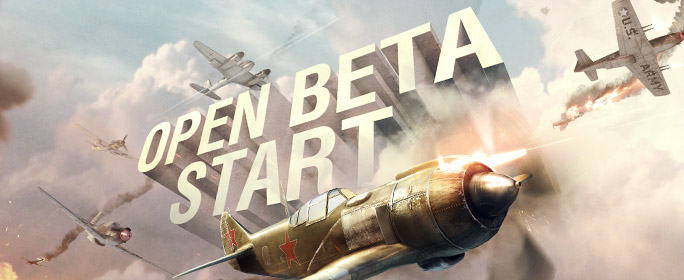
World of Warplanes open beta has been up and running for quite some time for now. Any impressions and feedback you could share at this stage? How's grind so far?

The game will fully go live before long. Still, we are going to release at least a couple of both minor and major updates prior to that focusing on interfaces, optimizations, single wallet / premium account for Wargaming's games, balance fixes (including high-tier battles), mouse controls, reduction of server lags, post-battle screen, cameras, crew functionality, new consumables, new content (Brits, anyone?), including maps and some other stuff, I forgot to mention.

So, how's your flight?

Sunday, July 14, 2013

Holding at Hondeghem

Today I want to have a look at a battle fought during the Blitzkrieg against France in 1940. This particular battle isn't that well known, and yet one of the roads at the location is named after the unit involved, in honor of the stiff resistance the troops put up. So here's the story of F Troop, K Battery, 5th Royal Horse Artillery.

5 RHA was moving towards Cassel on 24th of May 1940, during the German invasion of France. F Troop, with a small HQ from the battery was dispatched to Hondeghem to guard the flank of the force. A scratch infantry unit of 75 men, with 12 Bren guns, from the 2nd Searchlight regiment  was sent with them to provide infantry support.
The four 18 Pounders of F Troop were in position later that afternoon, along with the infantry. the 18 Pounders had first served in World War One, but had remained effective as field guns. After most were lost in France they were almost entirely replaced by 25 Pounders. Two guns were outside the village, with a screen of infantry and two more stationed beside the Church.


The following morning a Bren gun carrier roared up and issued a warning to the forward most gun, that a large force of Germans was approaching. The Germans in question where two companies of Panzers and an infantry Regiment from the 6th Panzer Division. The carrier was sent to report to the Troop's HQ.
After a short while a Panzer was seen moving along the road towards Hondeghem. The first gun, commanded by Troop Sergeant Major Opie, waited until the Panzer was fully exposed and less than 80 yards away. At that point TSM Opie ordered the 18 Pounder to fire, knocking the tank out. A line of several more Panzers and infantry then followed the first, attacking towards the gun pit. Both guns opened fire disabling another German tank. The rear most gun was then targeted by a storm of mortar shells and knocked out of action, leaving the Opie's gun alone.
The German's advance now enveloped the 18 Pounder on two sides, with small arms hammering the position when a Panzer charged up to it spraying it with machine gun fire, then the tank fired an armour piercing shell into the gun. This barrage killed all the crew, except two men. One of the two not killed was mortally wounded three times. The other was TSM Opie who suffered head injuries.
Both men refused to leave their positions and got ready to continue to fight their gun. However when inspecting the gun TSM Opie found the AP shell from the German tank had smashed the guns sights and rendered it useless. Before they could do anything else the position was over run by German infantry and both men were captured. The German officer on the scene immediately ordered them evacuated to receive medical treatment and provided a staff car for that purpose.

TSM Opie


With the outer line of defence now destroyed the Germans moved forward to attack the village proper. One of the surviving 18 Pounders was looking directly down the main line of attack by the Germans and began to put up a furious barrage of shells.
The second gun had no targets, realizing this, the crew man handled the gun down the street to engage the Germans attacking the other gun. As they did so they spotted a column of German trucks carrying infantry, moving up to flank the position. Quickly they took those under fire forcing the Germans back.
Savage close range and hand to hand fighting carried on for the next 8 hours. With the men of the searchlight regiment and K Battery putting up stiff resistance. The 18 Pounders were wheeled about being used to blast German occupied houses, and prevent the German from pushing up the streets. Most of the fighting was at under a 100 yards range, with Germans trying to knock out the guns with hand grenades.
At one point, due to the pace of the fighting one of the guns fired a smoke shell  by mistake. Spotting the danger both guns immediately increased their rate of fire. The concussion of the guns and their HE shells dispersed the smoke before the Germans could rush the Battery.

By 1530 both the infantry and the two remaining guns where almost depleted of ammunition and the Germans looked ready to carry the position, when a detachment of infantry from the Fife and Forfar Yeomanry appeared and stiffed the defence.

At this point a lull descended on the battle field as the Germans retired from the battle to regroup and prepare for another assault. On the British side, with all most no ammunition available, and many wounded the decision was taken to abandon the village. The Troop commander made sure all wounded were accounted for and evacuated. He was also the last man to leave.

Retreating towards the village of Saint Sylvestre Chapel the remnants of F Troop met up with about 20 men from the Royal Army Service Corp, and learnt that the Germans held the cross roads there, and that F Troop was cut off.
The Troop commander immediately ordered a bayonet charge. Splitting his forces into two, he ordered that one group charge one side of the graveyards, and led the charge against the other. The German troops holding the graveyard dropped their weapons and ran in fear. Allowing F Troop to deploy its two 18 Pounders. The Germans soon came back and both guns fired their last rounds holding the Germans at bay. As the first gun ran out of ammunition the battery tried to evacuate it. However as they limbered it up to its Quad an unseen German weapon smashed both with several shells.

This picture might be the gun F Troop tried to evacuate.


Utterly out of ammo, after being in action for nearly the entire day, with German reinforcements approaching and with night falling the decision was taken to retreat again. Unable to get the last 18 Pounder out the gun was put beyond use, and the remaining soldiers clambered aboard the last trucks.

However the only way to retreat was Through the German half of the village.

Setting off as fast as they could F Troop's column raced across the square and turned left to drive north along the main road. Only to find a number of Panzers blocking their way. they immediately took a right hand road that led out of the Village. Only to find the Germans had emplaced a Machine gun nest on one of the houses. With this machine gun hammering at them they made a dash for safety.
One truck took a corner to fast and plowed into a ditch, despite the Machine gun still shooting at them a second truck stopped and picked up all the passengers. A short distance further on they met up with another truck that had gone out of control and plowed through a fence and escaped across a field.
F troop had one last narrow escape. Upon reaching friendly forces they were surprised and alarmed to find out the road they had retreated down had actually been mined!

On the 24th of May F Troop had a strength of 63 personnel and 4 Guns. After the fighting only 18 remained.

Sunday, July 7, 2013

[WG] Anton Sitnikau On Warplanes

Yet another interview. Now with Anton Sitnikau, WoWP Lead Producer


 — Anton, currently you are World of Warplanes producer however your start was totally different – you were a programmer. What is the story behind this transition? How long did it take? What stages did you go through? 

— I was studying to become a programmer, which I eventually did getting software engineering degree from Belarusian National Technical University. My specialization was C++. First 10 years after graduation I spent working for a scientific research institute. I developed and supported dispatching systems for power engineering. Those 10 years were interesting both in terms of contents and financially, but it was middle-age crisis I guess that made me long for a change. I went to work for the largest IT-company in Minsk then (EPAM Systems - Overlord), where I did a course on ABAP/4. I stayed there for a year only and mostly because that condition was stated in my contract. Despite growing popularity and potential of SAP, it appeared to be not my cup of tea. I was invited for a job interview in a small and cozy company called Wargaming. The opening I was interviewed for was of a game logics developer. And that was my role in 2005 when I joined the company. In those times we were developing something that was later called “Operation Bagration” (Order of War for Western market - Overlord).


 — When you joined the company, were you thinking of becoming a game designer? 

— Back then I didn’t know that such profession existed. When they were introducing some of the colleagues who were game designers, I could hardly understand what the guys did. It appeared that game designers had their fingers in many pies – they were doing a lot of things from different areas. The only thing they didn’t do was drawing, perhaps. This situation was true not just about WG but a lot of other gamedev companies, too.  My personal transition to game design was smooth. Executing my duties as a programmer, I also worked on draft unit balance in technodemos and on making video presentations. When I got to grips with the essentials of game design, I finally realized that I wanted to be fully involved in the area.


— But why?

— I have never had troubles coming up with ideas. I felt that my background as a programmer is beneficial because it was easy to sieve the ideas that were impossible to implement. Long story short, I had an interview with Victor Kisly and my shift to game design was approved. Soon I was appointed “Operation Bagration” lead game designer.

— It sounds like you took over the project just off the bat? 

— Well, yes. I’d say it’s probably one of WG’s traditions to throw a person into the open see and wait if they swim out or not. If they emerge, that’s cool. If not, well…kinda sad but overall they work…so…
«Bagration» was a success. We got “Best Strategic Game Award” at KRI (Russian game awards - Overlord) and we also got Editor’s Choice Award from several game industry editions.
At some point at pre-final stage of working on the westernized reincarnation of “Bagration”  — Order of War — I was offered to move to “World of Tanks” project as a balance specialist. Mostly I was working on game economy but sometimes – on battle balance as well (at early stages - alpha, closed and open beta of WoT - Overlord). I was curious about other tasks too, but the project needed a technical specialist able to analyze and calculate, which I was. I worked out an economy model which was a totally reckless thing as there were no statistics – not enough at least – it wasn’t obvious what data to be guided by. Even the system of prices and values was to be defined. The model appeared to operate successfully and to some extent it’s been applied in WoWP as well. Obviously, the model has been polished as the economy of an MMO is affected by various influences and fluctuations. This process will be going on for as long as the project lasts.

— When were you offered to be at the helm of Warplanes?

— The initial balance of “Tanks” was completed. For a month or two I worked as an analyst and later became the lead of the analytical department that never appeared. During that time a report system  specifications were created (the system is now in WoT - Overlord). The system has been implemented and will be fully functioning in WoWP open beta. It was then that I was offered to check out “Warplanes”. I went to Kiev, played the prototype, got acquainted with the staff. Upon arrival I came up with a huge report listing project risks, major gameplay issues, gave characteristics to the staff. The time has proved that I was right about all of the points. Thus, I was offered to lead the project from Minsk side.

The studio in Kiev was very professional. It started to grow fast due to the new project mostly – World of Warplanes I am talking about. In Minsk we had experience, knowledge and vision developed with “Tanks”. All of it was to be shared with the developers in Kiev. Kiev specialists are cool but some “parenting control” is necessary anyways. It’s true not just about the level of concept creation but also knowledge transfer from major to minor details.


— Would you say that your programming background helps you now, when you are a project producer and in charge of “Warplanes” gameplay? 

— It helps when I have to make an astonished face asking: Do you really believe that the development of this feature will take a week? I’d say that my technical background, logical thinking and common sense are of great use. They help to formulate requirements and specifications. Plus it helps to stick to a rather strict and consistent product concept as such.

— How are “Warplanes” different from “Tanks” in technical terms? What problems did you have due to these discrepancies? 

— In technical terms “Warplanes” and “Tanks” are very different. One of the main reasons is the transition from 2.5D in WoT to full 3D in WoWP. Besides, plane speed and armament are totally different. Although we did understand that the concept of “like tanks but about planes” sounded a bit naive, it turned out that the gameplay was even more different than we imagined. A lot of solutions were to be developed from scratch. It was tough as we lacked some specific experience.

For instance, render. World of Tanks has never used the default one – offered by BigWorld. Our render was modernized and shaped according to tank “needs”. Even at alpha stage it was different from the default version. It turned out that what we had for tanks couldn't be applied to what we required to have for planes. Planes need bigger maps, very few visual objects in the air. Planes themselves are more complicated than tanks. The main object that the player sees for 99% of the whole gameplay should be implemented otherwise, not like in WoT. For “Warplanes” it’s not important to display a bicycle leaning on a fence in a shadow of a tree in detail, but this is something that those who play tanks should see. Those who pilot planes can see that only when they are flying over the ground on high speed. However, the rest requires a more thorough approach: complexity of the aircraft models, 3D terrain, massive trees, large city quarters, water, complex 3D clouds.

When Kiev programmers got the BigWorld box version render, they realized that it was not enough at all – just the same thing had happened to Minsk programmers when they were working on “Tanks”. For some time we were coping with a compilation of the default render, tank pieces and first own ideas, but eventually the WoWP render was redeveloped and redesigned completely. By the way, then the knowledge was transferred to St.-Petersburg - WoWS will get its own unique render that has very little in common with default BW solution.


— These render improvements of yours, are they integrated back to BigWorld? 

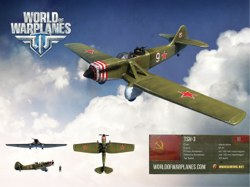
— Now they are. In the situation being we can prioritize our requests to the Australian team more effectively. Much work has been done on server-side improvement, network protocols optimization and toolset development. Speaking on server-side, WoWP differs from WoT a lot. For instance, take shooting. When the shell is fired, it flies with a particular speed according to particular ballistics, enters the armour plate under a particular angle. It can pierce the armour, can just damage it or ricochet. The shell behavior is defined by real life empiric formulae.  Having penetrated the shell can move further and damage one or more internal tank modules, inside armor compartments an so on. Now we can compare. The tank gun makes up to 6 or so shots a minute. My favourite example in “Warplanes” is the following: tier 3 attack aircraft – a monstrous Soviet construction of the 30-ies ТSh-3 – carries 10 machine-guns, every one of which shoots 10 bullets per second. Although the armour of planes is simpler that the one of tanks and we don’t really need detailed calculations for penetration, it still is a serious calculation problem. No one is insured against a battle where 30 (!) ТSh-3 will start shooting simultaneously.  Initially we were trying to deal with it by clusterization of bullets and after the server side optimization we can now calculate each bullet separately. Well, of course there are some simplifications but in terms of game mechanics, we are happy now.

— Apart from render-issues, were there any other difficulties in the development process of WoWP? 

— From the very beginning our major concern was simple and comfortable controls system. First, we simplified the aircraft’s behavior. We disabled the flatter – vibration on a particular speed, which may lead to a plane destruction. We disabled the spin, too. We left behind the nuances of fuel mixtures regulations and some other things. We are not trying to make a hardcore simulator, our target audience is different.  Despite this and thanks to this, our controls have to be user-friendly and understandable. And funnily enough our advantage is our drawback at the same time. What I mean to say is that everything is calculated on the server only.


— Is that a way of fighting against cheaters?

— Yes. We tend to guarantee equal rights for all players. What has it led to? Let’s compare with “Tanks”. The player pushes the button “move forward” and the tank accelerates. The plane has got totally different speeds. They require different reactions – being 200 milliseconds late can be too much for a player. “Warplanes” is definitely a more dynamic shooter than “Tanks”. Imagine the situation, game client has got player’s input, converted it, sent to server, the server has calculated everything and sent it back to client, which has interpolated and visualized everything. If the flight physics and the damage were calculated on the client side, we would be able to have sensitive controls straightaway.  However, the players can be located somewhere far and the ping of 300 milliseconds is quite unpleasant for “Tanks” players, for “Warplanes” it's just fatal.  By the way, server lags are just one aspect. Another aspect would be causality and easy controls. To solve this problem we spent a lot of time and resources. We created more than 15 controls prototypes. Barely 1/3 of those has reached our testers. At some point our flight model became overcomplicated and too difficult to balance. Our controls were liked by some players but hated by others. When we tried to change the controls, these audiences switched places. We felt we faced a dead-end.

However, a young and initiative group of developers inside the development unit – game designer Anton Muskeev and server programmer Misha Pavlenko gathered together to prototype independently in their own time. In one of the meetings with Minsk managers the guys presented their prototype and we got amazed! Their solution was developed in parallel to the existing one. After some time their idea became the default version and it was introduced in 0.4.0 update. Now we understand that we are on the right path.

What was the solution of the creative duet? The guys have totally redesigned the flight model on the server making the behavior of the plane more sensitive and real. They were not afraid to try out some architectural changes. It allowed us eventually to have a totally independent and quality data processing from different devices. I have to mention that the final version of the solution appeared with the help of 777 studio – the guys who created a fine hardcore simulator Rise of Flight about WWI warplanes. At the moment by the way they are working on the new IL2 with 1C. We invited them as consultants. Their expertise and fresh approach helped us to polish the great solution and make it fantastic.

Finally we implemented these new mouse controls. Plus we started working on a more hardcore option of the controls but it was decided to freeze the implementation.  Apart from the controls, the guys’ flight model was more predictable. This complex of solutions simplified game designers’ lives when it came to aircraft balance and adjustments. Now all the planes can be easily tuned according to both, historical data and gameplay needs.


— Are the Ukrainian developers any different from Belarusians? 

— They are. Their temperament is different as well as their attitude to corporate culture. In Minsk all communication processes are tougher. In Kiev they are more relaxed and friendly.

It is easier in Kiev when it comes to finding resources. Their market is richer. In Kiev there are a lot of studios of well-known companies, which “shared” their employees with us. From employer’s perspective the situation in Kiev is less tense than in Minsk. Plus, people are more eager to relocate to Ukraine rather than to Belarus.

I am happy to work with the Ukrainian office. The team has got experience of working for European and American companies renowned in game-industry. The guys in Kiev are competent and qualified. On one hand, their outsourcing experience is a double-edged sword. You have to change the way you think when you are working on your own project. On the other hand, “Warplanes” is the first own project for the studio. The story about controls development I told earlier is a proof of how the way of thinking is changing.

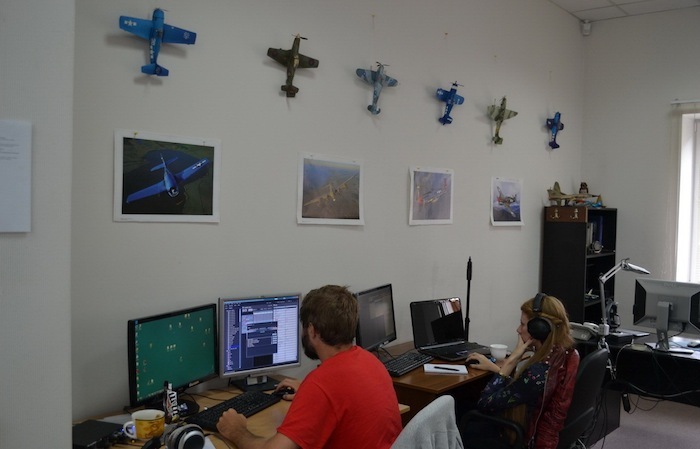
Generally speaking, “we make our own product” mood is still something that empowers Kiev developers. It becomes obvious the very moment you enter the office – posters of WoWP everywhere, a lot of plane models on desks. It’s great that people like what they do!


Originally posted here

Saturday, July 6, 2013

Black Box

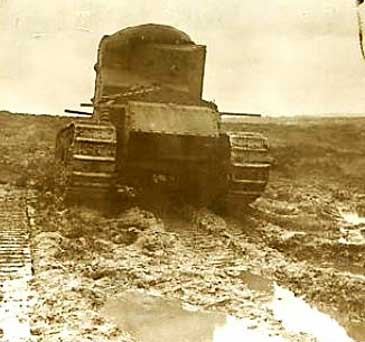
In 1918 the Germans had launched massive attacks and broken the allied lines. Then after stiff fighting the Germans suffered a crushing defeat. Ludendorff called it "The black day of the German army". A significant part of it might be down to one tank. A Whippet MK A light tank nicknamed Musical Box.
On 8th of August, Lt C.B Arnold, his gunner, C. Ribbans and the driver W. J. Carney climbed into their Whippet tank. One of 8 tanks in the unit, and left their overnight camp near Amiens. At 0420 the formation departed, passing Villers-Bretonneux (see Edfrancis thread about why that place is famous). However the going was bad, and soon all the other 7 whippets were bogged down, leaving Musical Box on her own.


Lt Arnold moved his tank up behind some Australian infantry and MKV tanks. Shortly after linking up with the advance his area came under fire from a battery of German field guns. Able to spit out 48 rounds per minute the German battery started causing serious problems for the infantry, two of the MKV's were smashed by the barrage.
Arnold drove his tank at its top speed of 8mph past the front of the battery engaging them with his machine guns. The Germans launched over 30 rounds at him, luckily none failed to connect. The Whippet made it to cover on the flank of the battery, and enabled Arnold to mount a flank attack on the Germans scattering the battery, and smashing the local German defences. The Australians were able to move up the quarter of a mile, and take the German position with no further loss.

After dismounting to liaise with the infantry Arnold moved off to rescue several troops of cavalry who had been taken under fire by Germans in a wheat field. After routing those Germans Arnold continued to attack. Unknown to him he by now was far out in front of the advance, deep inside the German lines.


Arnold came across a railway bridge defended by Germans. Rushing down the rails he smashed through their lines and scattered their defence, causing over 60 casualties to the defenders. For the next hour or so he harried a German battalion, causing significant damage.
Musical Box was not getting off scot free. The Battalion of Germans had put up such a storm of concentrated fire the fuel cans stored on the outside of the tank had been hit multiple times. These doused the tank in flammable fuel which leaked into the fighting compartment. The crew were standing knee deep in the petrol. The fumes became so bad that all three crew were forced to wear their respirators.
So Musical Box was now a driving bomb, with the crew drenched in fuel, the slightest spark and it's would all be over.

It was by now 2PM; Musical Box ploughed further into the German lines, and became possibly the only tank in WWI to score an aerial kill. She came across an airfield and on it an observation balloon. The transport for the Balloon, and the craft itself were both swiftly destroyed.
Moving on Lt Arnold spotted a German truck approaching, so he hid his tank round a corner, and as the truck drove past rammed it. Continuing down the road Musical Box found the rest of the transport column and set about them. She also routed another column of German infantry.


As Musical Box penetrated deeper resistance began to stiffen. Arnold didn't know it but Ludendorff's HQ was close by! In a fierce fire fight the Germans belted Musical Box with everything they had. At this point the left hand pistol port was shot off by weight of German fire. Grabbing one of the other machine guns Lt Arnold pulled it off its mounting and stuck the barrel through the hole ripped in his tanks flank. Firing the machine gun from the hip as his Gunner manned the Left Machine gun they delivered effective fire onto the enemy.

After 10 hours of constant combat, drenched in fuel the inevitable had to happen. A German field gun managed to score a pair of hits that ignited the fuel.
Bailing out Lt Arnold realised that both the other crew members were still inside the tank, he rushed back and despite being on fire himself dragged both from the blazing wreck. British infantry later found the burnt out hulk of Musical Box.

Although being in no shape to try, they attempted to escape, but were all captured by the Germans, during their capture one of the crew was shot and Lt Arnold sustained a bayonet wound.
Lt Arnold was interrogated almost immediately, and there followed an exchange between a German officer and Lt Arnold that is worthy of any film.
After being asked any question Lt Arnold replied: "I do not know."
"Do not know, or will not tell?" Was the German officers response.
"You can take it which way you wish!"  Arnold defiantly replied, followed by a under his breath comment of "...and be damned to you!"
The German officer stormed out of the interrogation.

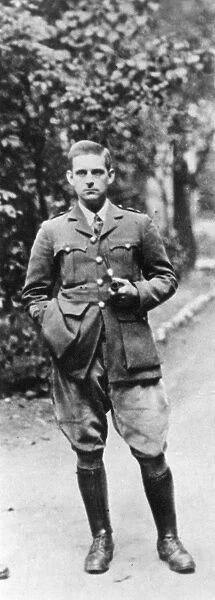
Lt CB Arnold


Arnold was sent to a German POW camp at Freiburg, where he found his Brother, whom had been captured earlier in the war. It appears that Lt Arnold received a DSO.

Thursday, July 4, 2013

[ALL] WG & Linux

Online game developer and publisher Wargaming relies on Linux and open source software to produce and distribute its line of popular military strategy games, says Maksim Melnikau, a solution architect at Wargaming.


The growing company joined the Linux Foundation in May as it seeks to advance the gaming industry. And it's off to a great start, having shipped more than 15 titles since 1998, including the armored World of Tanks and World of Warplanes, a free-to-play flight combat game. Wargaming is now expanding to a new mobile platform and continues to hire developers as it opens offices across the globe.

Here, Melnikau discusses how Wargming uses Linux; the company's hardware setup; gaming on Linux; his advice to game developers; and openings at the company.

How does Wargaming use Linux?

We extensively use Linux for multiple Wargaming projects. Servers for all our games, for example, are powered by Linux. Whether you play World of Tanks and World of Warplanes on PC, World of Tanks: Blitz on iPad, iPhone or any Android device, World of Tanks 360 Edition on your Xbox, or World of Tanks Generals in your browser—the server side is always Linux-based.

To run its web services, Wargaming actively uses a wide range of open source tools and frameworks such as, to name but a few: MySQL, Python, Django, Nginx, and RabbitMQ, and when it comes to servers, all our games rely on Linux.

The company’s development studios handle their day-to-day operations and processes, widely applying Linux. Finally, many of us prefer the GNU OS for everyday use.

What’s your server setup? 

World of Tanks has client-server based architecture, where everything is being calculated on the server. The major benefit it grants is security—it is virtually impossible to hack in to the World of Tanks. The client does nothing other than translate keyboard and mouse movements into commands to send to the server.
Maksim Melnikau, Wargaming
The overall server setup depends on the amount of active players. The Russian game cluster, for example, peaks with more than 800,000 concurrent users, which calls for relevant server capacities. Presently the game cluster has close to 300 powerful servers with 24 threads and 64 GB RAM each. Besides significant computing power, we have huge database machines with a lot of RAM (our largest database server has 384GB RAM, to be exact) and powerful storage (24 HDD x 600 GB in RAID10).

What are some of Wargaming’s most popular titles for LinuxOS users?

Although there’s no World of Tanks client for Linux, the game runs on Wine and other Windows emulators.
The collectible card MMO game World of Tanks Generals, which is now in Closed Alpha testing, will be cross-platform. Another upcoming title—the mobile MMO action game World of Tanks Blitz—will have a version for Android.

How has the recent release to Steam on Linux worked out so far?

Wargaming is not using Steam for its products. The company’s vision is to create and run its own distribution services. However, we are happy to watch Linux evolve as a quality gaming platform, and Steam is what helps it to grow.

What advice would you give developers who want to build games for Linux?

For starters, I’d tell them to be less platform-specific and concentrate more on the quality and robustness of the experience they create. If your game is engaging, accessible, and deep, it will attract players at launch. Don’t stop when the game goes live—improve and grow it to ensure users stick to it for years on. As for the server side, I would definitely advise you to choose Linux.

Why did you join the Linux Foundation?

We rely on Linux open source tools a lot. They help us continuously improve on our server platform and stay in the vanguard of the global technology evolution of this massive movement.
The Linux Foundation contributed greatly to Wargaming’s success, and we hope to continue our collaboration in the future and expand it into other areas.

I see you’re currently looking for a Linux system administrator. What are the skills and experience you look for in new Linux hires?

Besides system administrators, we seek Linux system developers and Web developers. The full list of vacancies and requirements for them is available at Hot Vacancies section of Wargaming’s corporate website. Linux engineers will find plentiful offerings there. As for the skills, we hire both experienced specialists and those only starting their work life.

Originally posted here.

Tuesday, July 2, 2013

[WoWP] Going Open Beta. Updated

World of Warplanes is going open beta: actually it already has done in Russia, and NA servers are being updated at this time, while EU will have to wait until July 4.

Updated. July 4. EU has also joined the open beta joy of WoWP. 


There is 0.5.0 update that brings the game to a new stage. Pre-orders (effective after full release) will also be available upon open beta launch - gave example to RU ones.

Reminder: during open beta (at later stages) there will be a chance to "farm" in-game gold in WoWP and spend it acquiring unified/single premium account for all (currently 2) WG games.

See you in the sky and waiting for first-hand feedback.   

Sunday, June 30, 2013

France's unknown Hero

Note:
Most of the material in this article was originally in French, so I had to use Google translate. This may have allowed errors to slip in, however I do believe its as true as it can be.

Special thanks to Roland Narboux, who helped me fill in some of the blanks. Mr Narboux also published the only book on the subject, which has far more details than contained in the article bellow. The book is however only in French. He's also the author of the Alfred Stanke article I link to later on.
Also thanks to Gauthier Blanc who helped with the French when Google failed me.

----------------------------------------------------------------

Marcel Claude Emile Haegelen was born on 13th of September 1896 in Belfort, France. He is almost utterly unknown, even in France. This is surprising considering his exploits.


Before World War One, Haegelen was a car salesman. He enlisted in the army, and was posted to 27e Régiment d'Infanterie. During his service with this unit he was involved in the precursor fighting and earliest stages to the battle of Verdun, at the bitter back and forth trench warfare at the Saint-Mihiel salient. During less than a year his service earned him three commendations, and the Rank of Corporal.
In July 1915 he started to learn to fly, joining Escadrille F8 (a reconnaissance squadron) at the start of 1916, flying Nieuports. In March 1917 he joined N103 Groupe De Combat. His SPAD carried the emblem of the Squadron, the famous "Les Cigongnes" or Stork.
Haegelen spent allot of his time shooting down observation balloons. But in the last years of the war he found himself mainly fighting against fighters of Jagdgeschwader 1, commanded by Herman Göring.
At the end of the war Haegelen had a total of 22 kills, 12 Balloons and 10 Air craft.


Haegelen left the air force in 1921; he was hired by the French firm Hanriot, initially as an instructor. He had a hand in the company’s move to Bourges in 1928, where he became Chief test pilot. The company set up a factory and aerodrome at this location.
In 1931 and 1932 Haegelen won the Michelin cup, the second time being the world record holder.
In 1936 Hanriot and Farman Aviation were nationalized into SNCAC.

At the outbreak of World War Two, Haegelen was enlisted back into the French air force, and given the rank of Lieutenant-Colonel. Forming an ad hoc unit made up of 6 Polish pilots and another pilot of unknown nationality, they were stationed at Bourges to protect the SNCAC works. The flight flew Curtis H-75 Hawks that France had purchased in response to the outbreak of war. Haegelen's H-75 carried the Les Cigongnes emblem.

In June 1940 Haeglen intercepted a German air raid attacking the town. Closing on a HE-111, he pursued it eventually shooting it down. In the process his plane took 14 hits, some of the bullets missing Haegelens head by inches. One bullet, however, hit him in the shoulder. He still managed to nurse the plane back to base and land it. At the age of 44, 22 years after his last kill, Haegelen scored his 23rd victory. He became one of only about 6 people to score air victories in both world wars.


Haegelen's unit racked up 30 combat sorties during the battle of France, but it was all for naught. As the Germans approached Bourges, Haegelen received orders to lead his flight to Algiers. Once there he was part of a team testing imported US aircraft until France surrendered. Haegelen was a committed anti-German, and wanted to join the allies and carry on fighting. However he knew his advanced age would hinder that. So he returned to Bourges under the terms of the Armistice. SNCAC in the meantime had been taken over by the Germans, and was building Siebel 204 aircraft.
Haegelen carried on working as SNCAC, but not as a collaborator. Haegelen was actually part of the French Resistance. Obviously the exact details of the Resistance's exploits are little documented. However we do know that Haegelen carried out a detailed reconnaissance of the SNCAC factory and Avord airfield, passing the results on to the allies. When the Allies bombed the airfield in 1944 they smashed Avord, with no casualties or damage to the surrounding town, due largely to Haegelen's work.


Another incident that might have been Haegelen's work at the SNCAC factory has a number of leaflets being distributed early in November. These called for a 3 minutes silence to celebrate the victory over Germany in the First World War. At the designated time the entire staff of the factory downed tools and observed the silence. The Germans were furious, arresting two men and deporting them.

Haegelen himself was arrested on March 15th 1943, by the Gestapo for espionage. Kept in solitary confinement for 33 days, the future looked bleak for Haegelen. Then mysteriously he was released without charge. There is some indication that Göring had ordered Haegelen's release, due to them both being Aces of the great war, and had fought against each other!
After his release Haegelen organised a raid, where he and few other associates broke into SNCAC and emptied the German armoury of weapons. They then handed the truck load of ordnance over to another resistance unit to be used against the Germans.

Although not entirely clear on the details, documents suggest Haegelen had some contact with another incredible man in the area, Alfred Stanke. See the following link for another little known hero:

Google translate or Roland Narboux's article on Alfred Stanke.

Haegelen survived the war, dying on 25 May 1950, and is buried in Pasir-Ris. At the time of his death He was a Grand Officer of the Legion d'Honneur, holder of the Military Medal, the Croix de guerre 1914-1918 and 1939-1945.

Friday, June 28, 2013

Thursday, June 27, 2013

[360] Tanks All Around


Taken from here.

Did you have a chance to try the game in beta on during E3 2013? Any thoughts?

I don't own any console and my first PvP experience with WoT 360 happened about 3 weeks ago - found the controls pretty intuitive. Sure thing, gold Xbox Live sub requirement is a kind of entry barrier, unfortunately there was nothing we could. May be MS will drop this as they did with updating fees just recently. :)

And, which side are you on - Xbox One or PS4? 

[WoWP] The Right Stuff

Back in the early days of flight people wrestled with technology they barely understood, with engines that would crash for no reason. Equally the controls were utter nightmares, and would often lock up at high speeds or just do something unpredictable, and pitch you into the ground.

To spur on the early pioneers there were many prestigious prizes.

Now am I talking about WOWP or the real world? The answer is “both”. I was an Alpha Tester for WoWP, and for a couple of months each week I would set a challenge for the players to win, and give it an award. The awards were named after a Person, item or event in aviation history. Required Proof was a screen shot.

So I figure it would be interesting to revisit those early days and immortalize the Winners. Keep in mind this was Alpha Testing so the controls seemed like they were actively trying to kill you, and the graphics looked bad. Of course the game has also evolved so its likely you will be able to better these numbers, but back in March 2012 it was a very different game.

Claimed Prizes:
John Derry Medal:
For achieving Mach 1. Winner: Trebs, clocking a speed of Mach 1.16.
John Derry was the First Briton to achieve Mach 1. In a later flight in the same aircraft it crashed killing him.

The Mario Pezzi Award:
Highest altitude you can reach in a piston aircraft. Winner: Sgt_Bones with an altitude of 2361m.
Lieutenant Colonel Pezzi set the Propeller driven altitude record. He set it in 1937 (in a bi-plane), and it stands to this day! 

Walter Frame Gibb Award:  
Highest altitude you can reach in a Jet aircraft. Winner: MartokY with an altitude of 3706m.
Walter Gibb, set the first Turbojet record in 1953, in a Canberra bomber.

Alan Pollock Award: 
For Low flying, under a bridge. If there is a tie break, the person who is inverted wins. Winner: GrmlZ, with an altitude of 3m and inverted.
On 5 April 1968 Flight Lieutenant Alan Pollock flew his Hawker Hunter under Tower Bridge.

Le Prieur award: 
Get a Air-to-air kill with a piece of Ordnance, not a gun. Winner: GrmlZ.
Le Prieur rockets were a type of incendiary air-to-air rockets. They were invented by the French Lieutenant Yves Le Prieur and were first used in the Battle of Verdun.

Unclaimed awards. 
(remember applications are closed)

Chuck Yeager Medal:
Doing Mach 1 and surviving! Chuck Yeager was the first Person to do Mach 1 and survive in 1947

HMS Argus award:

For the First Landing! The award is named after the first Aircraft carrier, which conducted the first landing on 1 October 1918.

Scott Crossfield Award:
Doing Mach 2. Scott Crossfield was the first person to do Mach 2 in 1953.