Purpose of this blog

Dmitry Yudo aka Overlord, jack of all trades
David Lister aka Listy, Freelancer and Volunteer

Friday, May 30, 2014

[WOTB] Update 1.0.1 is Live

Update 1.0.1 for World of Tanks Blitz is now live for Nordic countries (Finland, Norway, Denmark, Sweden, Iceland). Please update manually if your auto-update is off.

Some update notes:
  • Updated game icon
  • Updated re-login procedure. Better performance, lower chance of being disconnected.
  • Gold tab is now default for in-game shop
  • Fixed bug with incorrect X2 experience on battle results screen
  • Fixed crash when playing battle sounds (usually when firing or hitting someone)
  • Fixed crash during re-login while being in platoon (reinstall was needed)
  • Fixed disappearing "to garage" button in waiting queue while being in platoon
  • Fixed bug with "double" tutorial during registration
  • Fixed bug with statistics - battle distribution across nations
  • Fixed crash on news screen
  • Fixed crash when trying to register via GameCenter
Right now we are finishing our work on 1.1 update which will be ready for submission to Apple really "soon".

This weekend you can also get advantage of double free exp conversion. 50exp for 1 gold. 

Sunday, May 25, 2014

China Duty

The Japanese famously brought the United States into World War Two on the 7th of December 1941.  At the same time Japan launched a massive invasion across the Pacific, however that was on the other side of the date line, so the war started on the 8th.
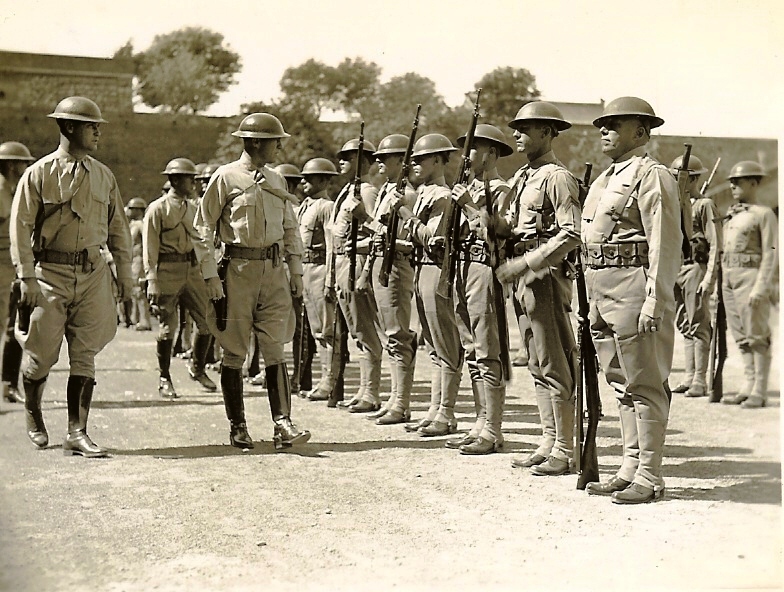
USMC Embassy guard in 1938
At 0800, 1000 Japanese soldiers surrounded a United States Marine Corps barracks at Tientsin in North China.  These marines were part of the embassy guards.  Overhead three Japanese planes circled lazily.  A Japanese officer called Major Omura marched up to the marine sentry and asked to speak to the Barracks Commander, a Major Luther Brown.  Maj. Brown knew Maj. Omura, and his superior Lieutenant General Kyoji Tominaga very well.  Maj. Brown had socialised with both before the sudden outbreak of hostilities and counted both as friends.

Maj. Omura had a written proposal.  It asked the Marines to surrender at one location, after stacking weapons at another.  The alternative was for the Japanese to enforce their demands with the troops they had  available.

After a telephone call to the Commander of the Embassy Guard in Beijing (Colonel William Ashurst), Maj. Brown agreed.  He believed that his marines would be counted as consular officials and would be repatriated to the US.  Due to a diplomatic misunderstanding between the two sides the matter of repatriation was never concluded.  At first the US had insisted on the marines return, however the Japanese considered them a military unit.  The US response was "that the matter would be decided at a later date."
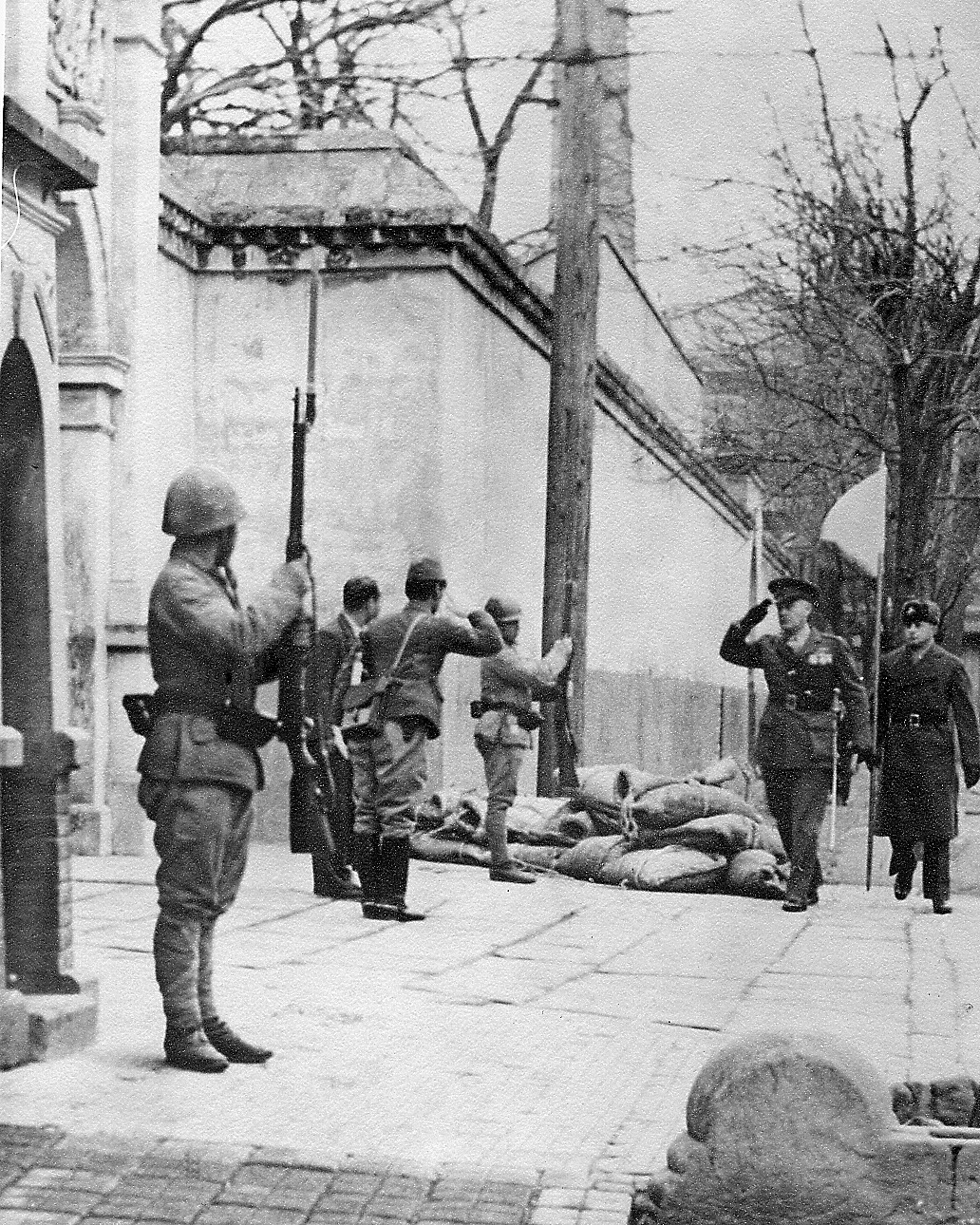
Col Ashurst arriving to surrender
On January 27th 1942 both groups of marine guards were detained at the same location in Shanghai.  They were informed they were not to be repatriated as there was no space left on the exchange ships.  There were significant issues with the exchange, including space, which threw the entire operation into jeopardy. So it is possible the excuse given to the marines was true.

At the start of February the marines were moved to Woosung Camp.  The camp already held the USMC prisoners taken at Wake Island, who had been there since the 24th of January.  Woosung was a 20 acre camp enclosed by an electric fence.  A second electric fence enclosed the prisoners accommodation and the parade ground.  The accommodation was seven wooden frame buildings that were poorly built.  Each had an attached toilet and washroom.
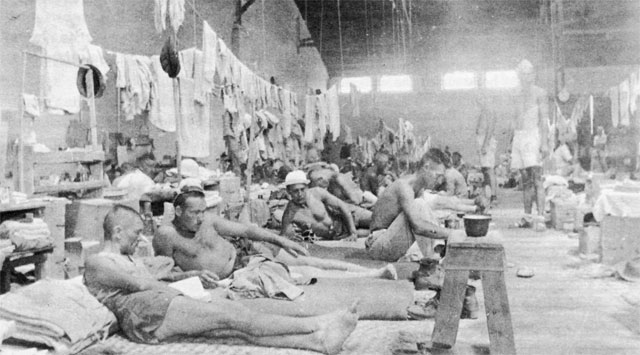
North China Marines inside their barracks
The poor state of the barracks was of real concern due to the bitter winter.  In the end the marines took to sleeping four to a single bunk, pooling all of their blankets to avoid freezing to death.  During the day when they marched out for exercise periods the marines had to wrap the blankets around their shoulders.  However, one of the civilian interpreters nicknamed the "Beast of the East" soon put a stop to that.

The despicable treatment of POW's by Japanese forces has often been described as being caused by the Japanese code of honour.  However the explanation has always seemed too simple to me.  A better understanding of the situation comes from piecing together the following information.  The POW's were forced to sign a document that said they had joined the Imperial Japanese Army.  Life in the IJA was incredibly brutal, with beatings and violence a daily occurrence.  One marine at Woosung recounts how he saw a NCO punch a private in the face.  The private then had to bow, when he straightened up he was punched again.  This punishment continued for some time.  POW's were therefore seen as the lowest rank of the army, and they had committed what the IJA considered gross misconduct by being captured.  Add in the language barrier and you may well get an inkling of why the POW's of the Japanese were treated so badly.

There were also civilian staff, one of which was Isamu Ishihara, who was considered the most brutal of all the guards.  Ishihara had been a taxi driver before the war, and had learnt English in the United States.  At Woosung he acted as an interpreter.  Despite his brutality, and later arrest in 1945 for war crimes, Ishihara didn't have things all his own way.

One day Ishihara flew into a rage, the subject of his displeasure was Sir Mark Young, the British governor of Hong Kong.  Pulling his sword Ishihara advanced on the old man.  Maj. Brown leapt into action, he ripped the Katana from Ishihara's hands, and shoved him away from Sir Young.
Sir Young
Shortly afterwards The Japanese second in command, Captain Endo, appeared on the scene.  After hearing what had happened Maj. Brown was given no punishment, and Ishihara was beaten with a two by four, and banned from carrying arms.

Another incident concerning Ishihara was when he punched a marine Sergeant, the marine punched back and floored Ishihara.  When Ishihara struggled to his feet, he walked up to the marine and placed his hand on his shoulder and told him he was a good prisoner.  The marine later won an award for being a model POW.

Finally, after months of appeals by the Red Cross and the USMC commanding officer the marines were moved to Kiangwan, a camp with better conditions.  There they remained until March 1945.  About then the marines started to hear rumours that they were once again about to be moved. So they started preparing by stockpiling food and supplies.
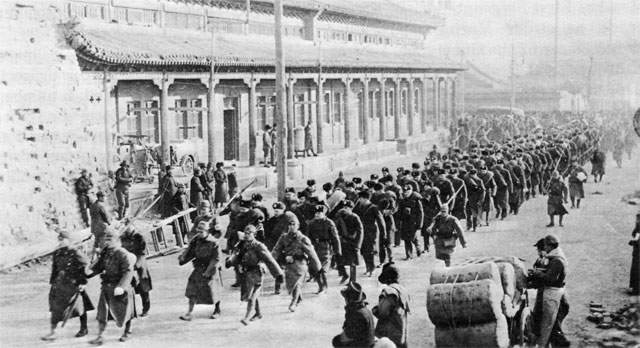
The North China Marines on the way to Woosung
On May the 8th the Japanese used the prisoners to make modifications to railway cars to transport them.  A few marines started making plans for escape, and managed to get included in the work party.  The rolling stock selected were boxcars with sliding doors in the middle.  The working party was to install an oil drum as a toilet, cover the windows with barbed wire, and place a blackout on each window.

The two ends of the box car were turned into compounds by more barbed wire stretched between the walls, with the area in between the doors having four Japanese guards stationed there.

After much arguing the marines managed to convince the Japanese that the oil drum used as a toilet should be enclosed for privacy.  Some doors were provided and were installed enclosing the toilet, and incidentally the window.  The barbed wire over the window was placed in a way that made it look like it was fastened, when it really wasn't.  Rungs under the window would allow a prisoner to hold on until joined by a second, so they could jump in pairs.  With these preparations in place, the marines formed a plan.

First Lieutenants John Kinney and John McAlister who didn't speak any Chinese would pair up with First Lieutenants Richard Huizenga and James McBrayer, both of whom did speak Chinese.  All were provided with cards with Chinese phrases written on them, which they could point to in an effort to communicate with the locals should the pairs be split up.

On the 9th of May the prisoners were marched down and boarded the train.  Despite their best efforts the escapees weren't put in the prepared box car.  After a days travelling the train reached Nanking, the next night the marines started their plan.  Whenever they could members of the group would slip to visit the oil drum, and working carefully they managed to free the wire from inside.  Whilst the guards were distracted by their supper the escapees managed to slip out the window.
The first problem was there were no metal rungs on the outside, so all the officers had to leap on their own. The train was rocketing along at about 40mph, each escapee had to leap into the darkness not knowing what they were about to hit. Although bruised and battered, and spread out over several miles all four were able to walk.

After a few hours skulking through the countryside hiding from Japanese patrols each of the four officers made contact with Chinese communist guerrillas.  All four were re-united at one location shortly afterwards. Then a fifth American called Lewis Bishop was brought in!  Originally he had been with the Flying Tigers before being captured.  He had been in the same box car as the four marines, and seeing what was going on, and spotting a chance he had gotten out.

The four became local celebrities, handed from one group of fighters to the next.  As they made their way through China towards friendly forces the Chinese units held rallies in their honour.  At each they were asked to sing the United States National Anthem.  However, all five of them didn't really know the words so they decided to improvise.

So its likely that for many years after the war parts of China thought the that the Marine Corps Hymn, the Halls of Montezuma, is the United States National Anthem.

The five escapees reached friendly territory on June the 16th, and officially got a home run.

Friday, May 23, 2014

[WoT] Public Test of 0.9.1

Give your feedback on the 0.9.1 update that is being publicly tested these days.

Main things to pay attention to:

1. Performance and stability
2. New Map: Kharkiv
3. Marks of Excellence on barrels
4. Reworked matchmaking for light tanks tier IV-VII. Rebalanced MT-25 and VK 28.01
5. Increased visibility for TDs after firing
6. Two new Historical Battles added: Bryansk Front (USSR, 1942) and Siege of Tobruk (North Africa, 1942).

Sunday, May 18, 2014

Tanks against Hooligans

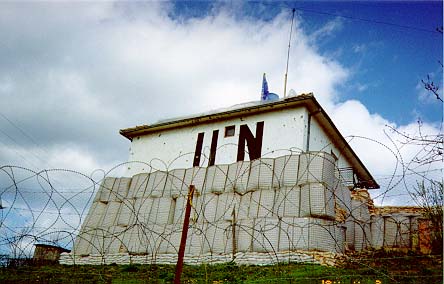
In 1992 the Balkans erupted into civil war.  As most civil wars do this one descended into atrocity and crimes against humanity.  As a teen watching the news it was the first time I'd ever heard the words "genocide" or "ethnic cleansing".  The years before the outbreak of the war had seen violence in the area, to such an extent the United Nations had stepped in to try and stabilize the situation and setting up the UN Protection Force.  This multi-national force worked throughout the civil war to try to keep the excesses of the combatants in check and save lives.

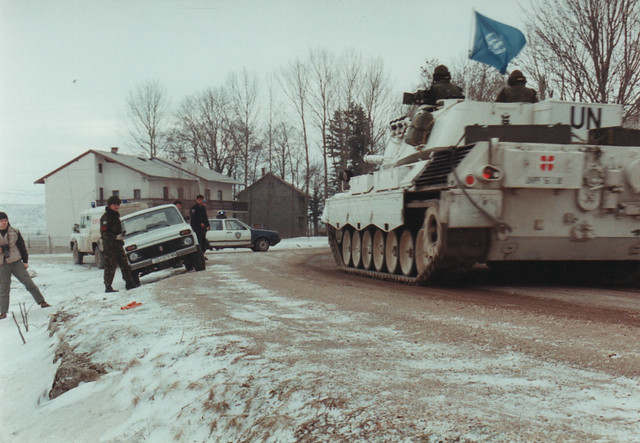
While partially successful things carried on getting worse, as the situation deteriorated heavier forces were dispatched.  In the autumn of 1993 the Danes stepped up, and dispatched a squadron of tanks to reinforce NORDBAT 2.  NORDBAT 2 was a battalion of Nordic raised troops based at Tuzla in Bosnia.
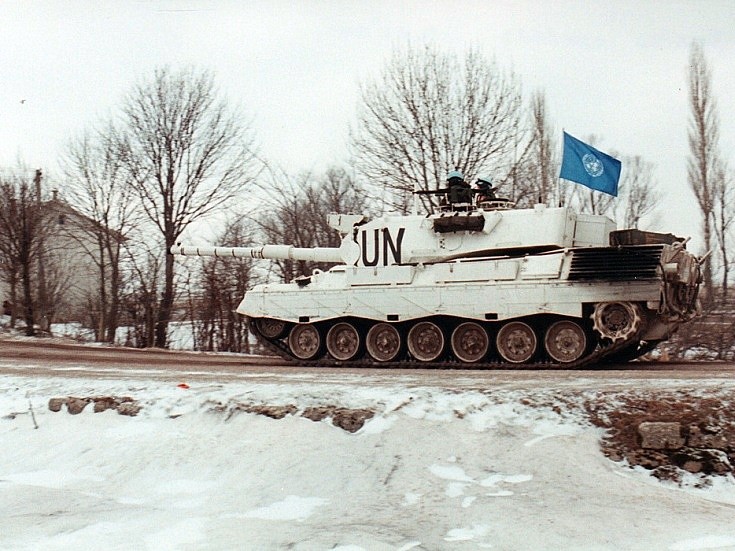
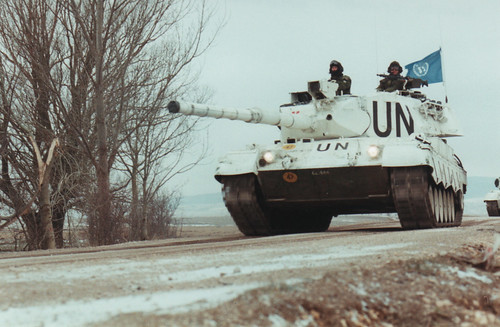
The squadron was made up of ten Leopard 1A5's from the Jutland Dragoons called DANSQDN.

On April the 4th a small fire fight broke out between the tanks and Serbian forces, this had followed increasing tensions in the area.  Soon afterwards the UN positions were being regularly shelled.  NORDBAT 2 then came up with a response plan called Operation Bøllebank, which translates as "Hooligan Bashing".  The idea was the tanks would act as a reaction force, as the UN soldiers had noticed that Serb forces tended to stop shooting when the tanks arrived.
As the situation got worse the Serbian forces decided to lay a trap.

At 2200 on April 29th, 1994 the Serbian forces began to fire upon an observation post called TANGO 2, which watched the Serbian border.  This was a fairly regular occurrence, as the position had been hit twenty eight times in the preceding weeks.  This time the position was taken under direct fire as well as indirect.  The seven Swedish soldiers manning the position radioed for help and Operation Bøllebank was set in motion again.  Two platoons led by the Squadron Commander, Major Carsten Rasmussen moved out, and as they neared TANGO 2 they met the APC of the second in command (Colonel Lars Møller) of NORDBAT 2 who was heading to the position as well.
TANGO 2
At 2315 the column reached the town of Saraci.  They drove in boldly, the bright white Leopards gleaming in the headlamps of the other tanks.  They still had to cover ten kilometres to reach TANGO 2. That's when Serbian forces from the Sekovici brigade began to shell the Danish tanks.  Col. Møller left one of the tank platoons in the village to provide overwatch and carried on the advance with the remaining four tanks.

Barrelling forward at speed it took about fifteen minutes to reach the village of Kalesija, all the while the Serbians fired upon the column.
Just outside of Kalesija a road led towards TANGO 2, however there is a tight hairpin turn in the road.  The heavy tanks had to slow to a crawl to get around it.  The first two tanks had negotiated the turn when a warning blared out across the radio.  The overwatching platoon had seen the flash of guided missiles launching, and could see the flares from the booster rockets tracking across the darkness towards their colleagues on the road.

The first missile was off by only a few metres hitting the ground between two tanks.  A second missile had been aimed at Col. Møller's APC, but hit a building he was parked next to.  The final missile was perfectly aimed at the rearmost Leopard.  Flashing arrow straight towards the bright white tank, the driver alerted by the warning slammed his brakes on, and the missile blew a hole in the road just in front of the skidding tank.
Against the darkness the Serbian positions began to twinkle with lights as cannon and HMG began to pepper the road.  The two Leopards that had made the hairpin turn were ordered forward to TANGO 2, they came under fire from the Zvornik brigade, but blasted through the Serbian positions and reached TANGO 2.

The rest of the column below the hairpin retreated into Kalesija.  Under cover from direct fire the Serbs started shelling the tanks with mortars.
At this point both Maj. Rasmussen and Col. Møller came to the same conclusion.  That enough is enough, and the Serbs had filled the Rules Of Engagement (ROE).  In Bosnia UNPROFOR's ROE said that they could return fire in self defence, at any weapon shooting at them.

In Saraci the overwatch platoon received the orders "Neutralize the anti-tank positions!".  The long range was not a problem for the tanks, fully fitted with computerised fire control systems linked to laser range finders and fitted with thermal sights, the three Leopards effortlessly destroyed the anti-tank missile positions.  But the enemy was well dug in with several positions and carried on firing.  The two tanks in Kalesija joined in firing against a second set of positions on a nearby mountain.  Their next salvo knocked out a light AA gun, observation post and crippled a bunker.

The expert gunnery of the Danes and the lack of targets quickly silenced the Serbian positions.  The vehicles in Kalesija waited a while to see if any other fire would be incoming, when it wasn't they broke cover to fall back to Saraci.  However as soon as they were visible again the Serbians opened fire once more.  The overwatch platoon responded immediately by giving the Serbian positions a massive beating.  The three Leopards fired constantly as fast as they could fire for 15 minutes.
As the overwatch platoon opens fire they see a flicker in their thermal scopes.  Three Serbian T-55's had switched on their infrared searchlights.  However the thermal sights showed that the gun barrels of the tanks are cold.  What happens next differs from account to account. Some say all three T-55's are knocked out by the Danish fire, others that they are not engaged at all.  All we know is the Danish vehicles managed to get into Saraci without taking any hits.  Then the Danish forces pull out of Saraci, the last shot fired by one of the overwatch platoon gets lucky and hits a ammunition stockpile causing a massive explosion that provides excellent confusion to help cover the tanks withdrawal.

During the fight the Danes fired 72 rounds, with 44 being high explosive, nine white phosphorous and 19 sabot, and they took no casualties.  The Serbians admitted to nine killed, although estimates suggest a figure of about 150 is closer to the truth.
Col. Møller said after the battle:
"It was an ambush, and a damn good one, Tango Two was the cheese, and we were the mouse. But this time the mouse ate the cat."

Friday, May 16, 2014

[WoTB] Minor 1.0.1 Update

We have finished work on minor 1.0.1 update for World of Tanks Blitz which is now available for iOS devices in Nordics (Finland, Norway, Denmark, Sweden, Iceland).

The update contains a few bug fixes and stability improvements aimed to get rid of some nasty crashes, including the one with platoon. Version 1.0.1 will still be available in the near future only for Nordics, not worldwide. Work on 1.1 update is on.

This weekend we are also doing first special with X2 gold for the same old price and X3 experience which can be earned 3 times per day - starting with CEST 2am, 10am, 6pm. Jump in!

PS
WoT Blitz > Ice Hockey World Championship 2014


Sunday, May 11, 2014

The Unexpected Tanks

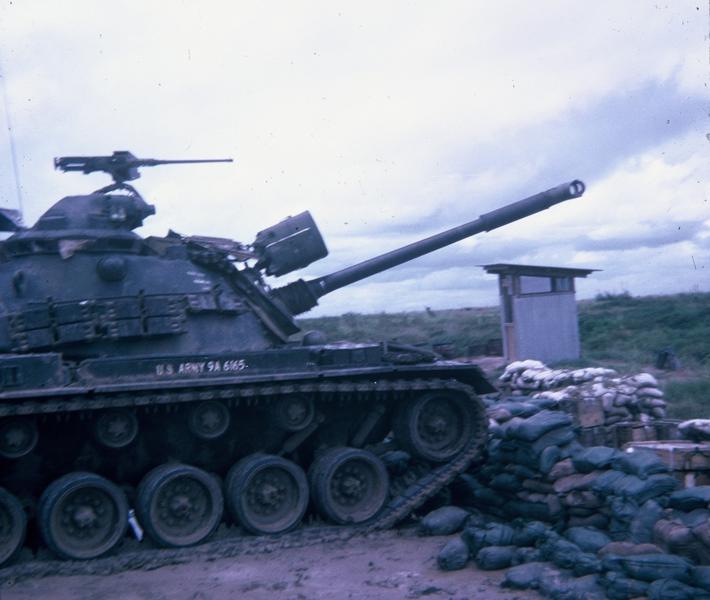
From the end of the Korean war until the the 1991 Gulf War the US only had two armour on armour engagements.  The first in 1965 was a bit one sided.  During the Dominican Republic civil war a US M48 Patton found itself in a battle with a rebel Stridsvagn L-60.  The L-60 was a solid tank when it was designed in 1934.  The one sided battle ended as we might expect.  The other battle happened four years later on a very different battlefield.
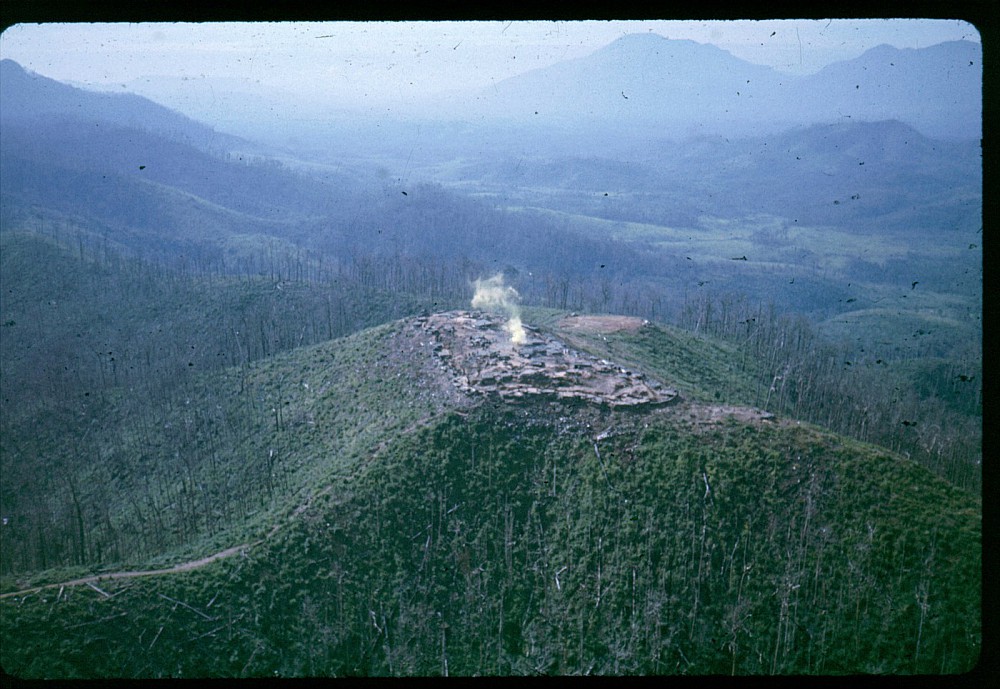
In the Vietnam War the North Vietnamese Army moved its troops and supplies down the famous Ho Chi Minh trail. When this turned to re-enter Vietnam the US built numerous firebases along its routes to halt supplies flowing to the fighting in the south. One of these was a special forces camp at Ben Het.
Manned by US forces and Montagnards, the firebase had two M42 Dusters and several batteries of artillery. B company 1/69th Armour was also deployed under the command of Captain John Stovall.  A single platoon was placed at Ben Het, the other tanks were spread out along the only road link to provide security and quick reaction forces.  From the bases’ west hill the US could call down artillery or air strikes on any suspected movement of NVA supplies coming off the Ho Chi Minh trail.  The NVA decided to smash the position.  Starting on February 23rd the NVA began to heavily shell the firebase at Ben Het.  Sometimes shells would be arriving at the rate of one every 45 seconds.

The artillery pounding came in part from Base Area 609, a heavily fortified NVA area.  The position was hit by air strikes on the 24th and 25th. But due to an ingenious trick they failed to cause any significant effect: the NVA had mounted its guns on rails, and given each gun a cave into which the artillery piece could be pulled backwards into when danger threatened.  The entrance to the cave had blast doors that could also be sealed.

Despite that the artillery emplacements revealed their positions by the muzzle flash when fired, giving the firebase a warning of an incoming barrage.  The US tankers also tried to fire long range at Base 609 with concrete piercing shells guided in by spotter aircraft.  All this had no effect on the bombardment.
The NVA fire wounded the platoon leader of the M48's stationed at Ben Het, as he was evacuated Cpt Stovall moved his command post to the base to take over command.

At the beginning of March the bombardment stopped.  However at 2200 on the night of the 2nd vehicle movement and engine noises could be heard from outside the wire.  Despite using their night vision devices nothing could be seen, and after 20 minutes the sounds ceased.  The US intelligence simply dismissed them as bulldozers.  A Montagnard patrol later reported a confirmed visual sighting of a tank.

The 3rd of March was very quiet,  and life continued as normal.  In the evening an observer was directing a Spooky gunship against targets in the vicinity, apart from that there was no firing.
Shortly before 2100, as the night began to draw in it began to get foggy.  With limited visibility the Spooky departed for home leaving the valley below Ben Het in quiet.
A few moments later the NVA began firing from a pair of recoilless rifles, pecking at the perimeter of the firebase.  At about 2130 a whirlwind of fire swept the firebase as the NVA forces opened up in earnest.  Nearly 700 shells were fired in half an hour.  At 2200 through the concussions of the shell impact the defenders could hear the "Bulldozers" again.  Peering through the night sights on their tanks or starlight scopes, even with the infrared searchlights on the tankers couldn't see anything but the trees and fog.  To make matters worse some of the tanks had no IR searchlights.
Suddenly about a kilometre out there was a flash and a a detonation.  One of the NVA tanks had hit a anti-personnel land mine and had been immobilised.  The NVA tanks opened fire lobbing HE shells at the hilltop, the immobilised tank opened fire first and its shell landed short of the firebase.  The M48's returned fire, one tank fired at the muzzle flashes, the second round it fired hit an enemy tank which turned into a fireball.

Meanwhile Mike Linnane, one of the US special forces A-Team members had grabbed his radio and called out to the Spooky that had just left the area.
"You've gotta come back, we have tanks down here!"
"Tanks?"
"Tanks! TANGO-ALPHA-NOVEMBER-KILO-SIERRA! TANKS!"
After a stunned pause the gunship replied that he was on the way back.  When the gunship arrived over the battlefield he began dropping huge amounts of flares to illuminate the area, as well as making attack runs.
By now the M-48's were also using their machine guns to strike back at the enemy infantry, whom were pressing closer and some had reached the wire.  As the conditions on the battlefield grew brighter from all the flares both from the Spooky and the defender's mortars, one of the NVA tanks spotted an M48.  As chance would have it Cpt Stovall was just climbing up the back of the M48 when the NVA gunner fired.

Accounts differ, one account says the round hit the glacis plate, another said the loaders hatch. Wherever it hit, both the driver and loader were killed, the tank commander was blown out of his hatch and landed ten feet behind the tank and Cpt Stovall was seriously injured by shrapnel.

Spare tank crewmen from Cpt Stovall's command post had been helping feed the artillery and mortars by heaving shells.  When they saw what had happened they raced to the M48's position, and formed a scratch crew to continue to fight the wounded tank.

At this time another tank was brought into action, normally facing a different direction it had been unable to engage the main enemy attack.  Again sighting at the muzzle flashes its gunner managed to destroy another NVA tank.  As the battle wore on the tanks began to run out of ammunition and were reduced to firing concrete piercing rounds.  One APC was spotted and pummelled into oblivion by several of these shells.
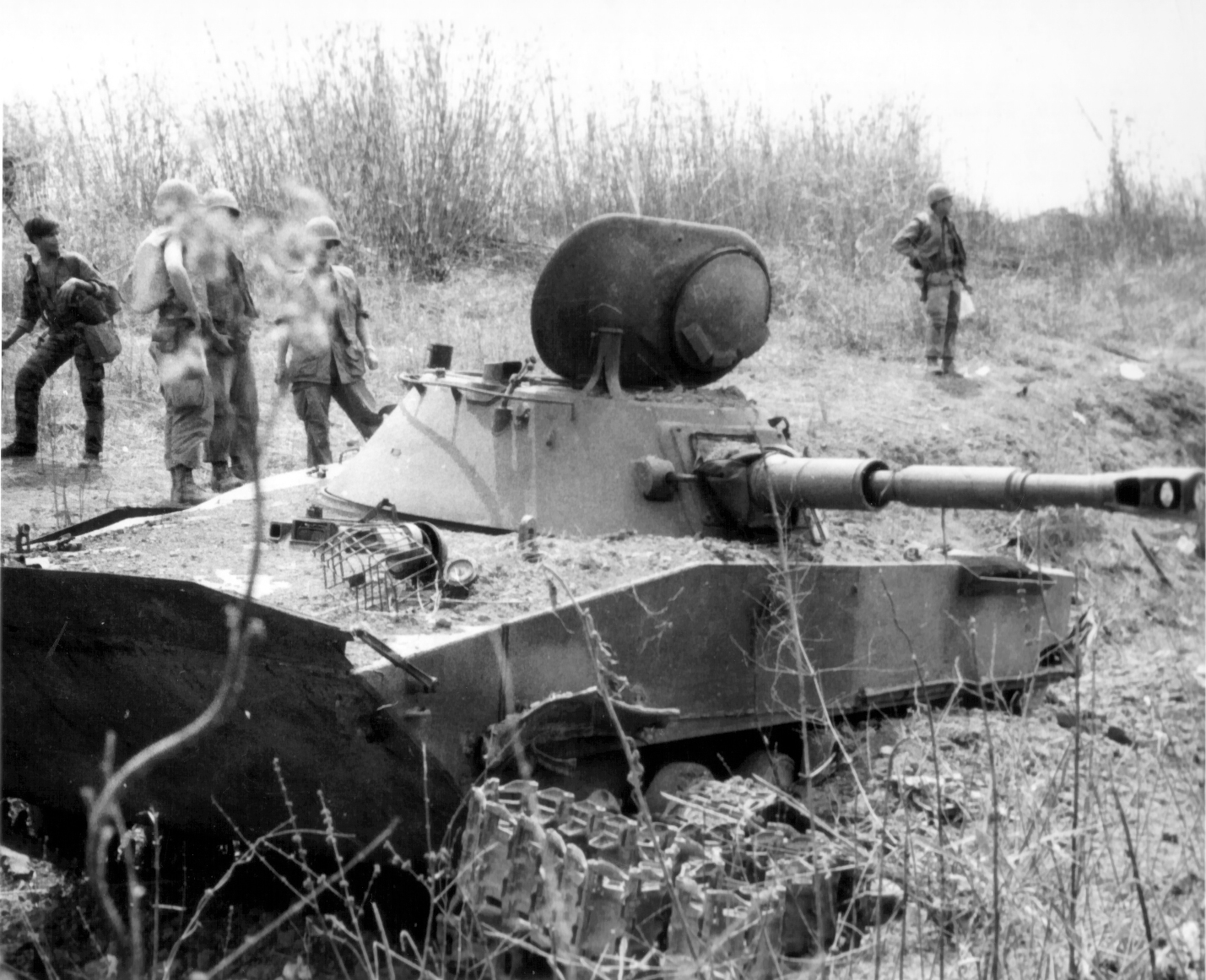
At about midnight the NVA began to break off the attack.  The Base at Ben Het had held for the loss of three killed.  The next day inspection of the battlefield discovered what the NVA tanks had been.  A pair of PT-76's lay smoking below the base along with the hulk of a BTR-50.

Wednesday, May 7, 2014

[WoTB] Gathering First Feedback and Questions

Hopefully, there are some Blitz players around.

What are your first impressions on the game so far? If you have any questions, ask away.

By the way, just hit 1.000 PCCU. :)


Monday, May 5, 2014

[WoTB] Get Your iDevice Ready. Updated

Updated May 5. The game is now live for the following countries of EU region: Finland, Denmark, Norway, Sweden, Iceland. This is so-called softlaunch or regional release, so no more wipes/resets or anything.

The game will be available worldwide soon (tm).

Beta testers of EU region are getting the following for helping us in beta:
  • Beta tester medal class IV/III/II/I for 1/10/100/500 battles during beta
  • Pz.Kpfw. IV hydrostat tank (tier 5) for 1+ battles during beta

Are you ready? It's coming.


Sunday, May 4, 2014

Ronson

The nickname "Ronson", after the cigarette lighter, is often applied to Sherman’s "because they light the first time".  The trouble is the Ronson company didn't use that slogan until several years after the Second World war. The closest anyone has found is this advert from the 1950's.
There was a Sherman Ronson though, it was a flamethrower armed tank, but like a lot of Sherman based flamethrowers it lacked performance. It is a popular myth that Sherman flamethrowers never took part in the fighting in Europe, but that's not strictly true.  But unlike the nickname Ronson, they performed rather poorly.

In mid 1943 the three main western allies held a conference about flamethrowers.  The result showed that the US were trailing behind the other two nations, this spurred the US army to accelerate its attempts at flamethrowing vehicles.  Earlier in the year the US had seen a demonstration of the Churchill Crocodile. Suitably impressed the US delegation was informed that the Crocodile kits should be able to be fitted to M4 Shermans.  This would mean the US forces wouldn't have had to take on a foreign vehicle.  Towards the end of 1943 the US army started sounding out the British on the idea of Sherman Crocodiles, requesting that about 100 Shermans should be converted.  The British then provided a wooden mock up for the US officers to view, whom in turn agreed that the design should be prototyped.  At the start of 1944, after seeing a demonstration the US placed an order for 115 conversions, although in reality only four would be completed.
I believe this is the mock up. Note the early mud guards and odd looking flame gun compared to later photographs.
For the modellers out there, it should be noted that the British were to provide common parts of the Crocodile design, so its likely the components would be painted in S.C.C. 15 Olive Drab, which as you know weathers differently to the US colour.  Of course the US may have repainted the British parts with standard US colours, so pick whichever you think looks best.
Early US Flame thrower tank
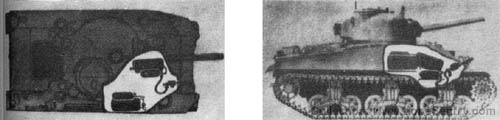
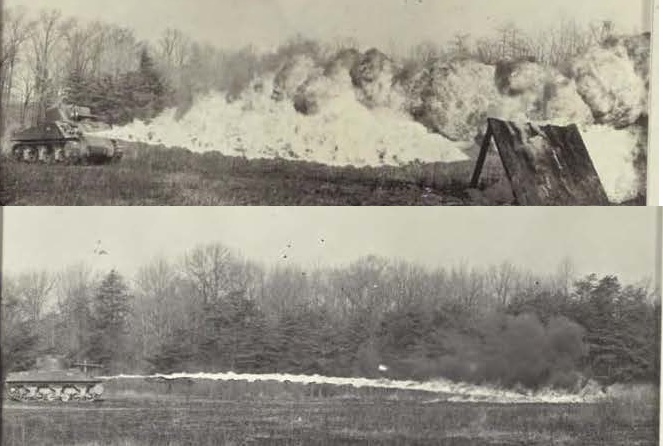
Alongside this the US domestic programs had continued.  The design that was selected as an auxiliary flamethrower, designed to replace the .30 calibre bow machine gun.  Two packs consisting of a 25 gallon tank and pressure cylinder were fitted inside the tank at the hull gunners position. The entire fit-out weighed only 997 pounds.  There were no outward visual changes, so even a modified Sherman with the E4-5 kits would be visually indistinguishable from a normal Sherman.
E5R1 flame gun
One conversion kit was requested in April 1944, and was shipped in June.  In a demonstration in the UK on the 23rd of June, and a repeat performance in Normandy in August it performed rather badly and failed to light.  After re-working of the design several kits were airlifted into Europe arriving in September, when it was issued to front line units.

The crews who received the kits were less than thrilled at the idea of adding more fuel to a tank that was already regarded as a fire trap.  Equally all the extra tanks and fuel canisters made evacuation from the tank harder, with the bow gunners hatch being partially blocked by one of the pressure cylinders.  The emergency alternative escape hatch was blocked by a fuel tank. 
Wherever possible the kits were installed in Sherman Jumbo's.  Things carried on going badly for the E4-5. The 741st Tank battalion had two E4-5 equipped tanks attached to it, however one broke down immediately leaving one to go into action on the 18th of September.

Its target was a German held bunker.  The stated range of 70 yards quickly turned out to be false.  The Sherman had to advance to within 25 yards before the flame could hit the bunker.  Even then it was utterly ineffective and the Germans remaining inside their bunker were not harmed.  The after action report suggested that for some unknown reason the flamethrower wasn't firing at the correct pressure.  This problem was to plague the E4-5 system, along with a tendency to fail to ignite.   This happened to the 743rd tank battalion near the Roer river, when a E4-5 flamed a group of Germans occupying a roadside ditch.  The Germans were soaked by a wet burst of flame fuel.  In the same operation a E4-5 did show what it could do, when it was used to flush out German defenders occupying a house on a hill.  The slope of the hill meant that the Sherman’s could only shoot at the upper floors of the house.  But the flamethrower could place effective fire on the lower floors by lobbing the fuel over the crest of the hill.  It forced the Germans to evacuate the position.
To further compound the problems suffered by the E4-5, the system had been introduced without properly trained personnel.  This was almost certainly the cause of a massive explosion that happened when a pressurized cylinder of oxygen, rather than nitrogen was used in the system.  The other issue of course was the terrible range the system gave, it meant the Sherman had to enter effective range of the German Panzerfausts before it could stand a hope of hitting its target, assuming the system worked.
But what of the Sherman Crocodiles?  In November 1944 they were issued to a mine exploder platoon of 739th Tank Battalion.  During the remaining few months they only used their flamethrowers once, at the town of Jülich during Operation Grenade on the 24th of February. 
The city was seized, however the Citadel remained in German hands. It was heavily fortified and ancient fortifications still work after a fashion, even today.  Any infantry assault would have caused massive casualties.  For example the first obstacle was an 85 foot wide moat. The mine exploder platoon was brought up to reduce the fortification.  However two of the tanks broke down or became immobilised in the rubble of the city.  The attack was strangely similar to the Churchill Crocodiles assaulting Brest.  The two Shermans halted on the edge of the moat and incinerated the positions facing them. The Germans were forced to retreat from the area.  The Two Shermans then pummelled the main gate with their 75mm's, blasting it open.  Then the tanks clanked slowly across the bridge, with their trails of fuel bouncing along behind them.  Once inside they set about burning everything, the bright tongues of flame spearing through the billowing smoke.
When the US infantry entered and seized the remains of the position they spotted four Germans fleeing over a hill outside the city, those Germans had used secret escape tunnels to get away from the savage Crocodiles. The Castle carried on burning for two days.

Sunday, April 27, 2014

Trench Crocodile

One of, if not the best book I have ever read is H.G. Wells War of the Worlds.  The following passage is near the start of the book:

"Then slowly the hissing passed into a humming, into a long, loud, droning noise.  Slowly a humped shape rose out of the pit, and the ghost of a beam of light seemed to flicker out from it.  Forthwith flashes of actual flame, a bright glare leaping from one to another, sprang from the scattered group of men.  It was as if some invisible jet impinged upon them and flashed into white flame.  It was as if each man were suddenly and momentarily turned to fire."
In the first world war, if you had been in the German trenches near Mametz, and had braved the British artillery barrages to peer across no-mans land on the morning of July 1st, 1916, you would have seen something horrifying and similar to Well's words happening in front of you.

Like War of the Worlds the main driving force is the protagonists partner.  William Howard Livens was the son of the Chief Engineer at Ruston Engineering Company.  He followed in his fathers footsteps training to become a civil engineer.  However on the day he finished his studies Britain declared war on Germany.  Like many millions of others he immediately volunteered.  With his training he was given a commission in the Royal Engineers.
Livens with his much more successful "Livens Projector"
In May 1915 Livens fiancée was in New York and she set sail for England, the ship she was to take was the ill fated RMS Lusitania.

Upon hearing of the fate of the liner Livens swore an oath of vengeance*.  He began working on ways and means to get back at Germany.  Luckily for Livens his fiancée hadn't been on board and he got the good news three days later, however this didn't temper his anger.  Putting to work his inventive nature and previous home experiments on gas and flame weapons Livens soon got noticed.  He proposed a new weapon of war, it became known as the Livens Large Gallery Flame Projector.

There is a clue in the name of how it was intended to be used.  Gallery referred to tunnelling warfare, which was an extremely hazardous occupation. Nothing could survive above ground in no-mans land, so the obvious answer was to dig underground.  In most cases the tunnels were used to place mines.
The most famous example is the Lochnagar mine, the largest man made explosion at the time, with its report heard in London.  The tunnellers had to be completely quiet lest the Germans hear them.  If they were heard then all manner of nasty counters could be employed, with the fate of being buried alive a very real possibility.

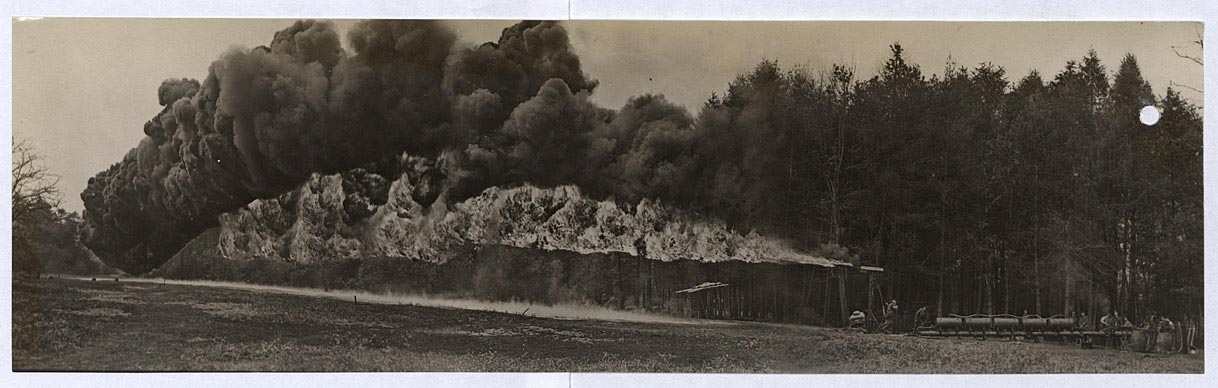
Livens proposed something new.  A tunnel would be dug as near as possible to the German lines, and the Large Gallery Projector then installed in it.  The Projector was 56 feet long and weighed two and a half tons.  It used a diesel engine to power a pneumatic system.  The pressure would force the head of the machine out of the ground, then squirt a stream of burning kerosene and diesel fuel over 60m.  Then this cloud of flame could be worked across the Germans front lines.  Due to the amount of fuel needed the Projector could only fire three shots of ten seconds each.
This monstrous machine had to be carried into the tunnels in pieces, once there it was assembled in place. All of this had to be done in utter nerve wracking silence.  After it was complete the cans of fuel had to be manhandled into place.

On the 28th of June one of the four Projectors to be used in the upcoming Somme offensive was being carried down to the trench, when a German artillery barrage fell upon the men.  Throwing the pieces about the soldiers dived for cover.  After the barrage lifted the components were recovered and stored in the entrance to the tunnel, only for a later barrage to land a shell squarely on the tunnel entrance.

However despite this setback at least two, possibly three, Projectors were in in place for the 1st of July.  On that morning the great British offensive of the Somme was launched.  On the first day 60,000 soldiers were killed.  To put that into perspective that's almost the same number as the current British Army strength.  Even with these massive casualties the British barely made a dent in the German lines, apart from at Mametz.
The seven men operating each machine switched on their engines, opened the taps and activated the Projectors.  On the surface the roar of the engine would have been muffled to a quiet droning, barely audible over the artillery barrages, and the detonation of several mines under strong points.
Slowly a square shape forced its way through the ground, and rose into the air. Forthwith a spark, then a boiling cloud of smoke and flame sprang from the Projector.  This terrible jet washed upon the German trenches and doused them in flame.
The British assault reached the German trenches, and was successful.  Its been argued that elsewhere in the battle of the Somme the same tactics were used to less effect, and that the only differences in the attack plan was the use of the Livens Large Gallery Projector.  The limited employability and huge size meant that the Projector was only used once more in combat.
Livens went on to design the far more successful Livens Projector, which was used through out the rest of the war as the principle means of delivering gas or incendiary shells.


*Some sources say it was the casualties at the Second battle of Ypres that caused Livens to make this oath.